Vine Maple and the First Hint of Autumn Form
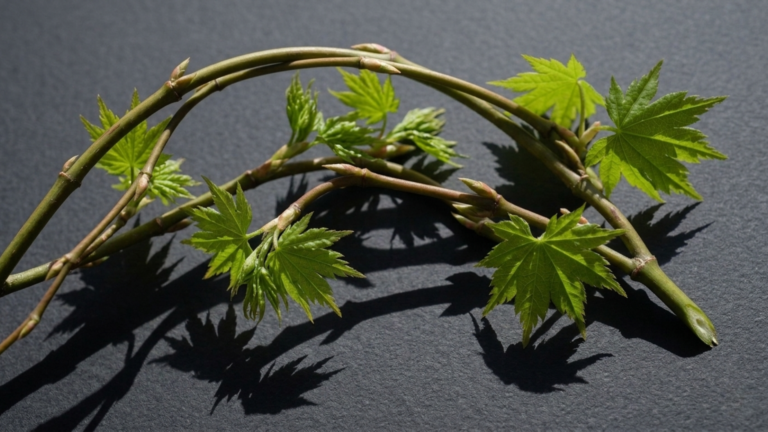
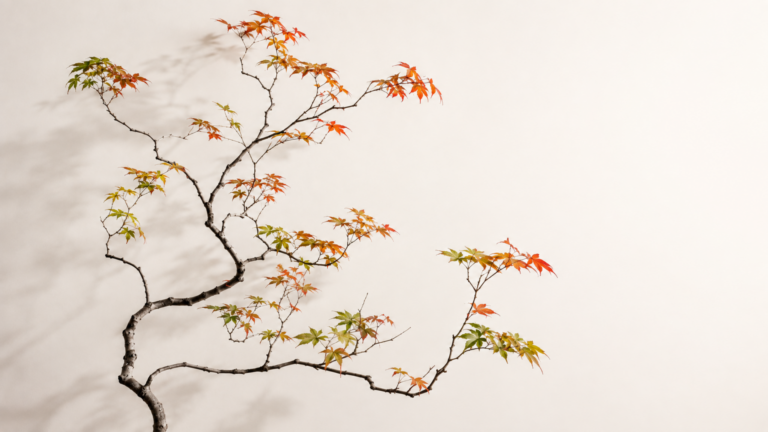
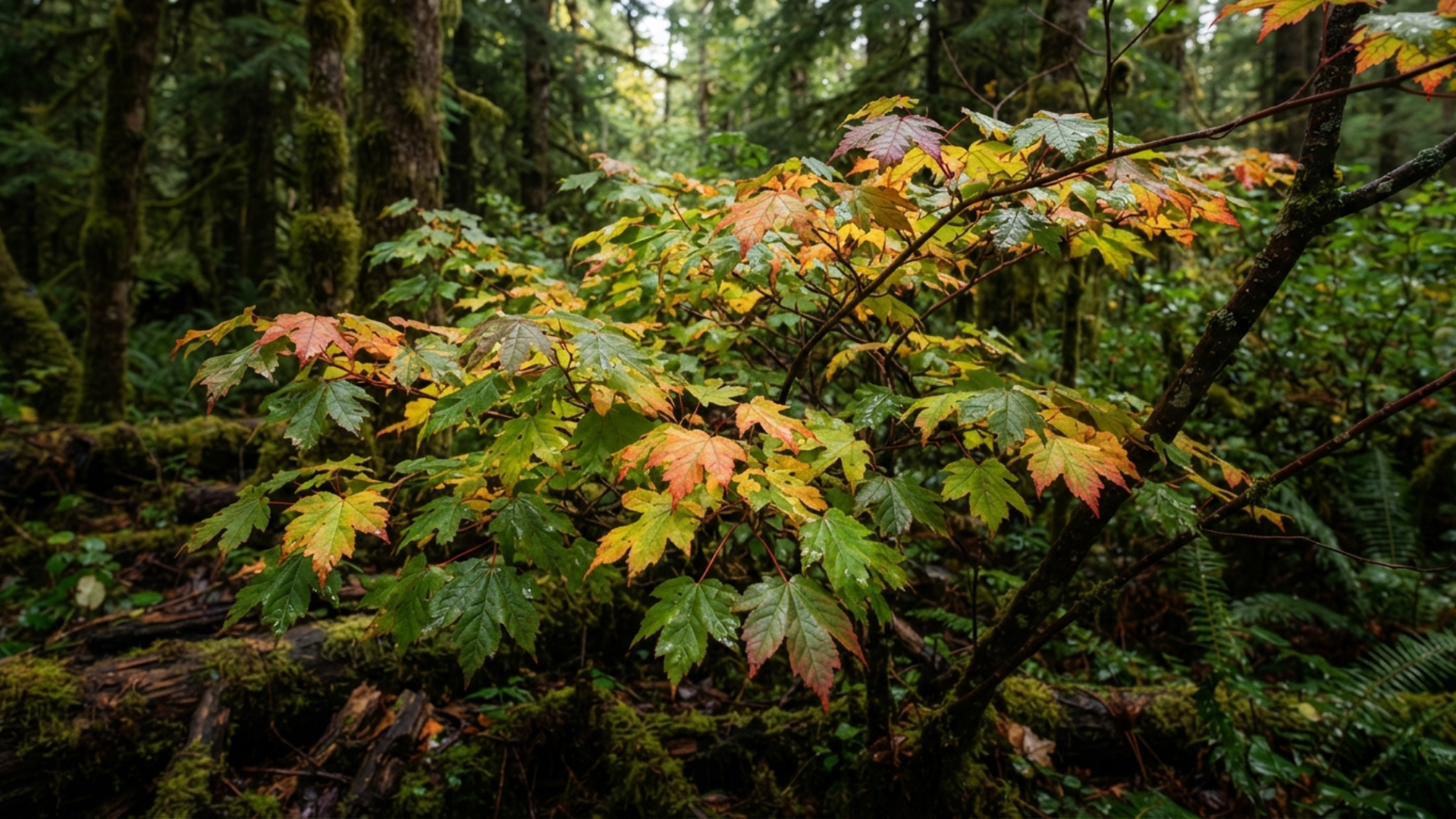
Vine maple floral design begins with structure long before autumn color arrives. Acer circinatum (vine maple) begins to reveal a different kind of information in late summer, when the silhouette becomes easier to read, and the branching becomes more legible. In mid-August, the woodland is still overwhelmingly green, yet vine maple begins to reveal a different kind of information. Certain leaves lose their uniformity. A branch here and there lightens. The silhouette becomes easier to read. For designers, this is often the more interesting transition. Color is still ahead. Structure is already speaking.
Across the five-acre woodland, vine maple occupies a particular role in the seasonal progression. Learn more about vine maple. Spring emphasizes emergence. Early summer emphasizes foliage mass. Late summer begins to reveal line again. The stems feel less concealed. The branching becomes more legible. Negative space returns to the conversation.
The Value of a Partially Revealed Silhouette
Designers often think of vine maple through its autumn color. The golds, ambers, and reds earn that attention. Yet the weeks preceding that display offer something quieter.
At this stage, Acer circinatum contributes gesture more than spectacle.
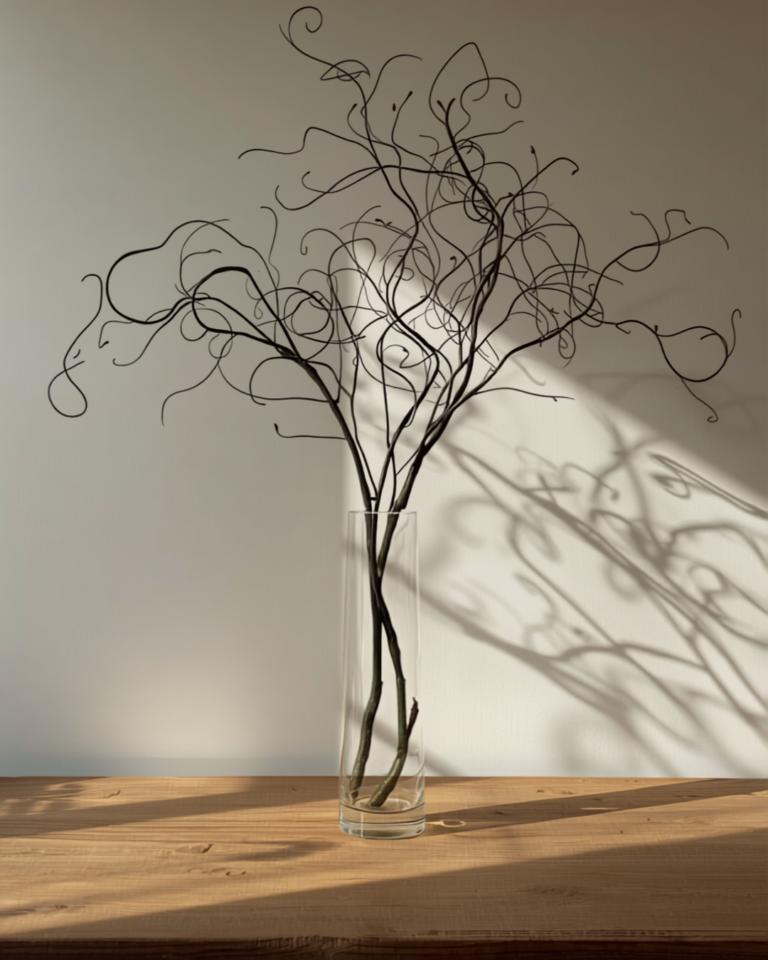
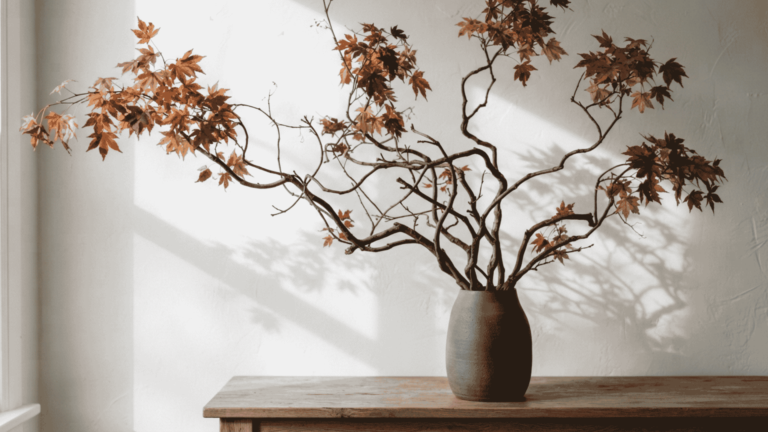
The branching carries a natural irregularity that feels drawn rather than engineered. A stem shifts direction without appearing abrupt. One branch extends while another pauses. The result is a silhouette that introduces movement without disorder.
This is where vine maple differs from many cultivated branch materials. Its posture feels discovered rather than imposed.
Reading the Woodland Forward
The sword fern, Polystichum munitum, still carries its deep evergreen grounding. Summer growth remains present throughout the woodland. Yet certain materials have begun looking toward the next season. Vine maple is among them.
The change is subtle enough to be missed when viewed as a landscape. It becomes easier to recognize stem by stem.
A few leaves soften in tone. Small openings appear within dense sections of growth. Light begins moving differently through the canopy.
The woodland rarely changes all at once. It advances through signals.
Vine maple is one of the first.
Seasonal Presence and Design Possibility
For designers working with PNW woodland materials, vine maple floral design often begins with understanding the branch structure before the autumn palette fully develops.
The branching reveals its rhythm clearly. The line is easy to follow. Future color is implied rather than declared.
That restraint is part of its value.
Not every material needs to arrive at peak intensity to be useful. Some materials are most instructive in transition. Vine maple belongs in that category.
The woodland sets the tempo.
Right now, it is speaking in small signals.
If autumn projects are beginning to take shape, inquire about current harvest windows and seasonal possibilities. Availability follows woodland progression, and conversations often begin before the season fully reveals itself.