PNW Woodland Materials — Echinops ritro
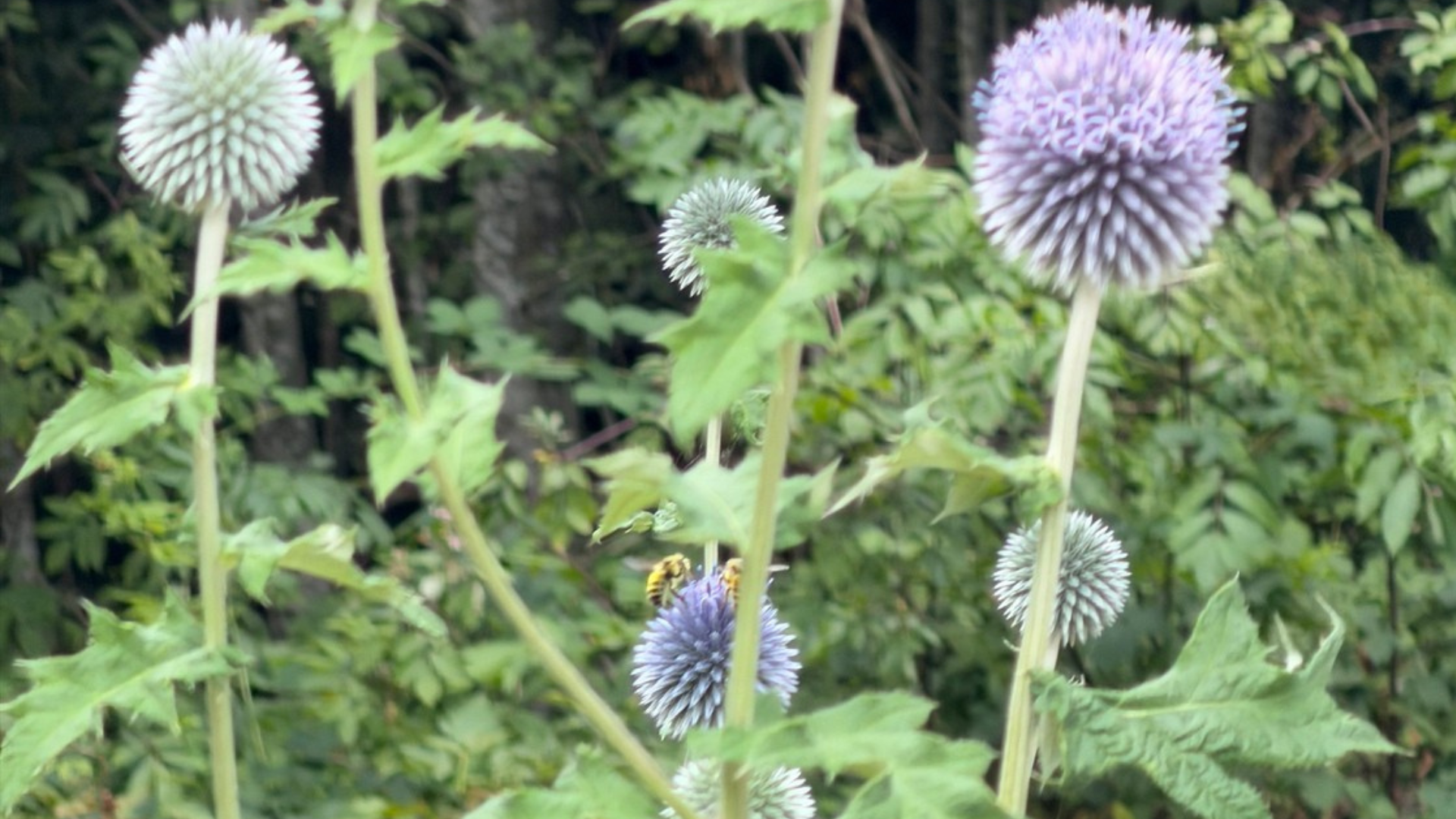
PNW woodland materials — Echinops ritro — show their late‑summer architecture now. The spherical heads hold full color, and the outer florets open in thin, readable rings. In the Arlington–Stanwood woodland, the stems rise cleanly above the surrounding foliage. Their cool-toned presence behaves more like shadow than color. This is the moment when the material feels most sculptural, with firm heads, upright posture, and tonal quiet that supports branch-led work.
Echinops ritro in the Arlington–Stanwood Woodland
The woodland’s late-summer conditions shape how Echinops reads in a composition. The heads are firm and architectural, the stems lignified, and the color stable. Even in dense plantings, the vertical line stays readable. Designers working with restraint often lean toward materials that introduce shape without weight, and Echinops answers that need directly. Its muted blue-violet tone behaves as atmospheric shadow, allowing the stem to punctuate a composition without shifting its emotional temperature.
The September Second Flush in PNW Woodland Conditions
Echinops ritro offers a second movement before autumn settles in. After the first wave matures, the basal crown starts its next cycle and pushes new stems in late‑August warmth. By September, the woodland carries a smaller, more refined flush. The heads tighten, the stems feel more deliberate, and the color cools with the shift in light. This second flush reads as clarity rather than abundance.
Seasonal Window for Echinops ritro
The primary window arrives in mid-summer as the heads color and the stems strengthen. The secondary window follows in early autumn, shaped entirely by the plant’s own rhythm. In September, the heads tend to be fewer but more sculptural, offering a quiet counterpoint to the woodland’s transition toward deeper tones and slower movement. Once seed set begins, the material shifts from architectural to textural, and the window closes.
Design Character Across Both Waves
Echinops ritro carries a clean, spherical silhouette that remains readable from distance. Its tonal weight is muted and atmospheric, allowing it to hover within negative space rather than fill it. The gesture is upright with minimal lateral movement, and posture remains firm in both summer and early autumn. The September flush often carries a slightly cooler tone and a more refined sphere — a subtle shift that aligns naturally with early-autumn palettes.
Pairing Echinops ritro With Other PNW Woodland Materials
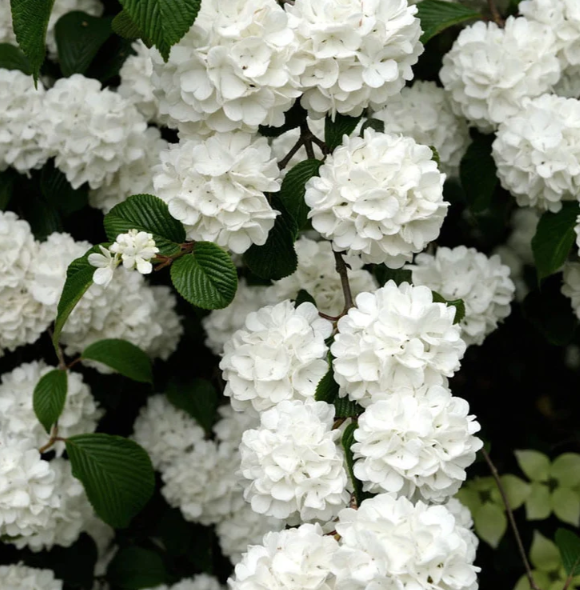
Echinops pairs well with cascara for line, vine maple for structure, snowberry for tonal contrast, and Cornus sericea when deeper color is needed to ground the work. Woodland ephemera introduce subtle shifts in texture that complement the spherical form. These pairings allow designers to build compositions that rely on gesture, silhouette, and tonal quiet rather than volume.
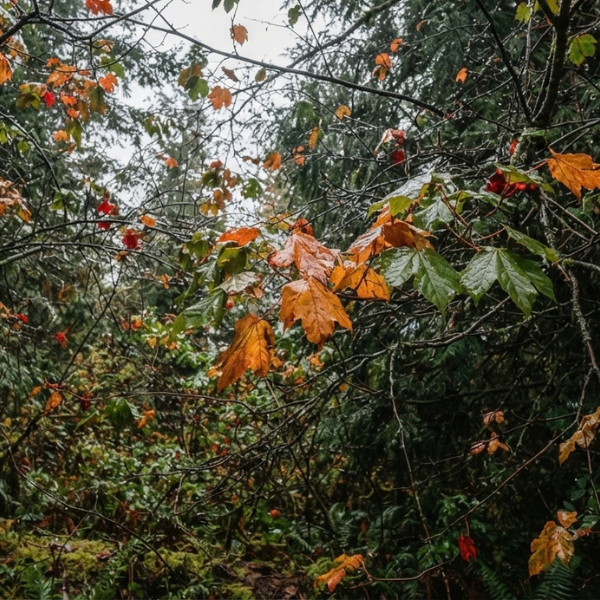
Transitional color during the quiet weeks →
Availability Rhythm From the Woodland
Echinops ritro appears in late summer and again, in smaller windows, in early autumn. The September flush follows the plant’s natural rhythm and arrives quietly as the woodland shifts toward fall. I share availability by inquiry and arrange pickup directly from the woodland when the material is ready. Designers who stay in seasonal conversation with Woody Shoots gain access to both movements — the summer sphere and its early‑autumn echo.



One Comment
Comments are closed.