
Woodland Species Atlas
The Woodland Species Atlas is a field guide to Pacific Northwest native botanical materials observed, gathered, and studied within the evolving woodland system of Woody Shoots in Arlington, Washington.
Each entry documents how a species moves, how it holds posture after cutting, how it responds to seasonal transition, and how it functions compositionally within branch-led design work. Because the atlas grows continuously as Diane deepens her knowledge of each species across seasons, it is a living resource rather than a fixed catalog.
The atlas includes both currently harvested materials and species observed or studied within the woodland system. Not every species documented here is available for seasonal harvest at all times. For current availability, visit the Seasonal Botanicals page or inquire directly.
New to woodland materials? The Woodland Behavior Glossary is a useful companion to this atlas — it defines the behavioral language used throughout these entries.
Seasonal Categories
Woodland materials can be read seasonally or compositionally —
by the role they play within structure, movement, atmosphere, rhythm, and spatial balance.
- Cornus — saturated winter line and structural contrast
- Thuja — evergreen backbone and layered depth
- Leucothoe — dark tonal evergreen movement
- Lichens — softened atmospheric texture
- Vine Maple – asymmetrical winter branching
- Western Sword Fern – evergreen structure
- Heuchera — grounding foliage and tonal weight
- Holodiscus -(fresh) — airy plume texture and light diffusion
- Vine Maple – chartreuse movement and unfolding line
- Cascara – soft leafing structure and layered depth
- Snowberry — pale fruit and understated contrast
- Holodiscus (dried) — parchment-toned seed architecture
- Spiraea — upright dried plume structure
- Cascara – amber foliage and refined branching
- Lichens — woodland-floor atmosphere and muted texture
Design Utility
Woodland materials function differently within composition —
some establish structure, some create movement, while others soften transitions or hold atmospheric space.
Line & Architecture
Movement & Gesture
- Oemleria
- Ribes
- Holodiscus
- Corylus (catkin sway)
Grounding & Weight
Atmosphere & Mood
- Snowberry
- Lichens
- Holodiscus (dried)
- Vine Maple (autumn clarity)
Species Profiles
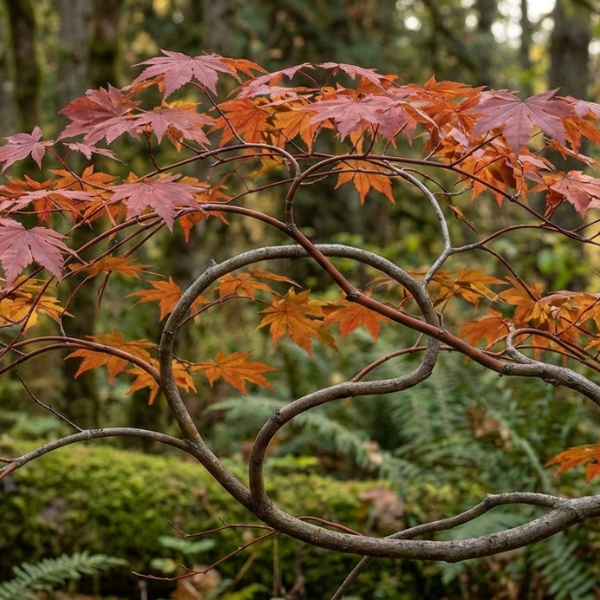
Vine Maple
(Acer circinatum)
Asymmetrical branching · Layered movement · Seasonal gesture
Vine maple is valued for its flexible branching, layered movement, and naturally asymmetrical line. Stems bend, arc, and redirect through space with a loose woodland structure that feels gestural rather than rigid.
- Seasonal availability: Bare branching in winter; chartreuse growth in spring; flame‑toned structure and foliage in autumn.
- Design temperament: Multi-directional line with strong negative-space potential. Useful for framing, transitional movement, asymmetry, and atmospheric branching structure.
- Behavior: Holds visual movement without heaviness. Particularly effective in branch-led work where posture, spacing, and seasonal rhythm are central to the composition.
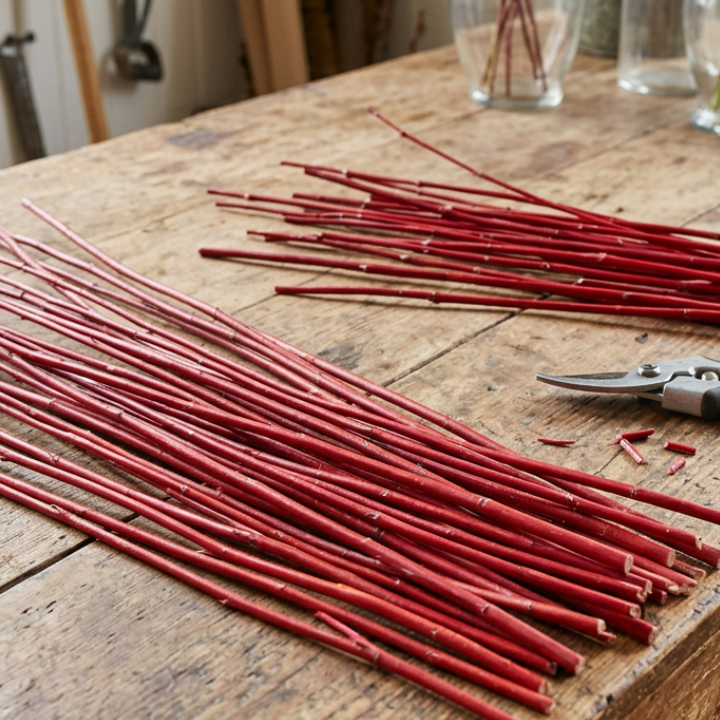
Red Osier Dogwood
(Cornus sericea)
Saturated winter line · Structural contrast · Cold-season backbone
Red osier dogwood is a winter-forward structural material valued for saturated stem color, strong linear rhythm, and high seasonal contrast.
- Seasonal availability: Strongest from late autumn through early spring, particularly after leaf drop, when cold exposure intensifies stem color.
- Design temperament: Upright to slightly arching line with excellent rhythmic repetition. Useful for establishing structure, directional movement, and winter contrast within subdued palettes.
- Behavior: Holds visual weight without excessive heaviness. Stem color remains highly visible in low-light compositions and branch-led winter work.
Beaked Hazelnut
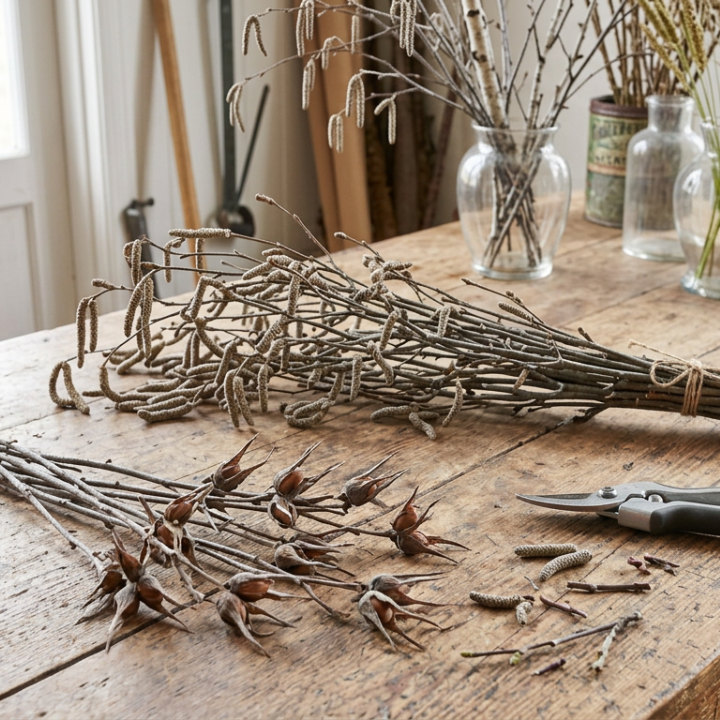
(Corylus cornuta)
Early movement · Catkin texture · Late-winter transition
Beaked hazelnut introduces one of the first visible shifts in woodland rhythm, with pendulous catkins emerging during late winter before broader spring growth begins.
- Seasonal availability: Late-winter catkins; early spring branching structure.
- Design temperament: Flexible, conversational branching with soft kinetic movement and tactile suspended texture.
- Behavior: Catkins dry gradually and retain suspended movement after cutting. Particularly effective in late-winter compositions where transitional texture and kinetic detail are needed alongside more structural evergreen materials.
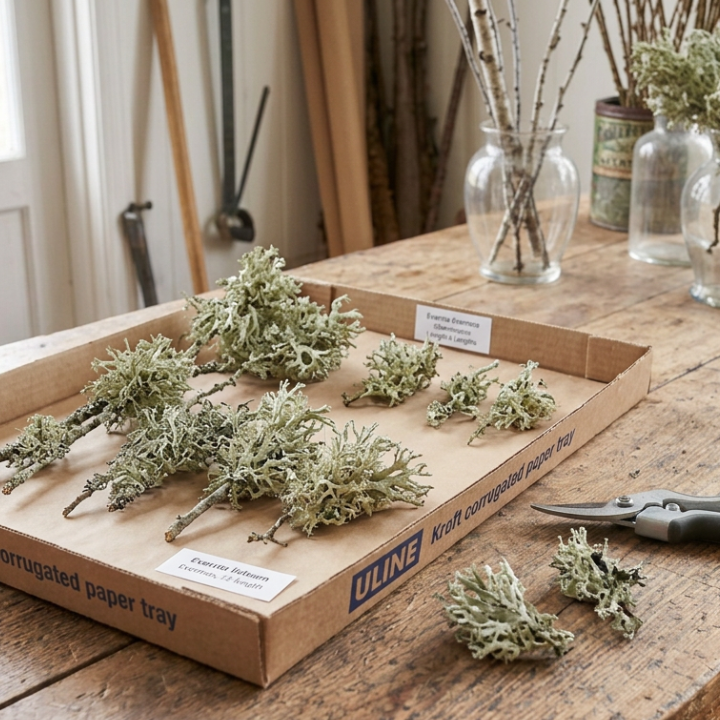
Woodland Lichens
(Evernia, Usnea, Cladonia)
Atmospheric texture · Surface softness · Woodland veil
Woodland lichens introduce softness, age, and atmospheric texture through muted tonal variation and irregular surface structure. Gathered selectively after storm fall and wet weather events, they function less as focal material and more as quiet environmental layering within composition.
- Seasonal availability: Most accessible during wetter autumn-through-spring periods following wind and rain events.
- Design temperament: Lightweight texture with diffused visual edges. Useful for softening transitions, muting hard structure, and creating woodland atmosphere without visual heaviness.
- Behavior: Adds surface complexity, tonal aging, and suspended softness. Particularly effective in branch-led work, moss compositions, installation detail, and negative-space compositions where restraint is central.
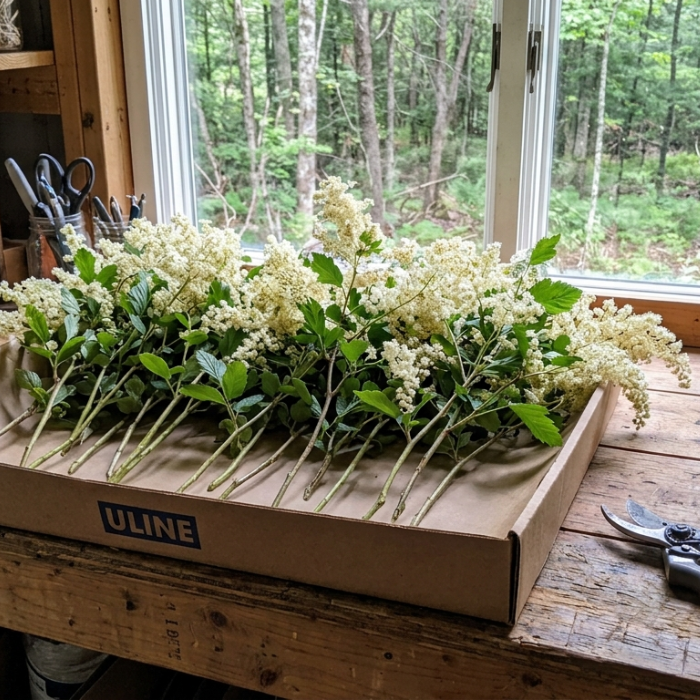
Ocean Spray
(Holodiscus discolor)
Foam structure · Dry movement · Summer-to-autumn transition
Ocean Spray is valued for its branching plume structure, suspended texture, and tonal fading as the season progresses from fresh bloom into dry architectural form.
- Seasonal availability: Airy bloom plumes in early summer; parchment-toned dried structure extending into autumn.
- Design temperament: Diffused branching with strong atmospheric layering potential. Useful for creating softness, visual drift, and transitional texture between focal materials and open space.
- Behavior: Holds volume with relatively little visual weight. Dried material develops increasingly skeletal structure and muted tonal variation, making it particularly effective in restrained palettes and branch-led seasonal work.
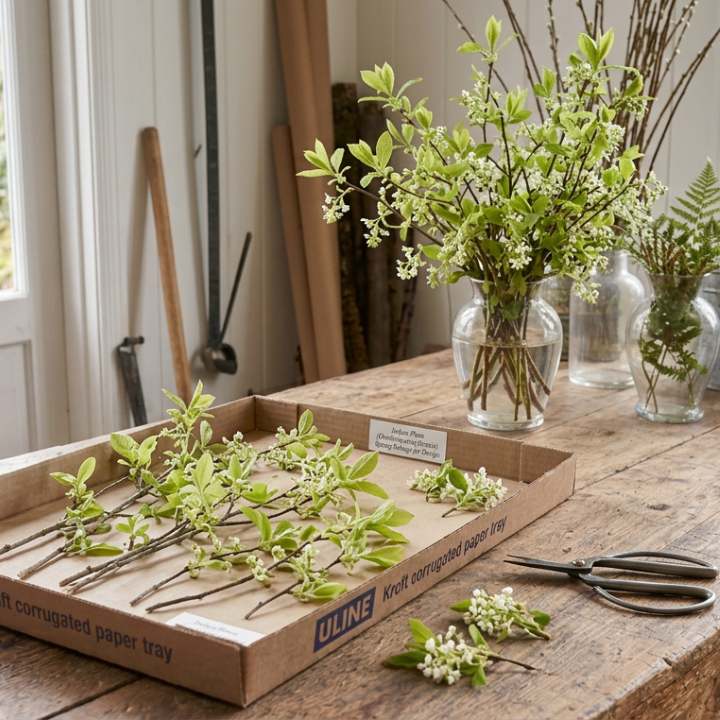
Osoberry
(Oemleria cerasiformis)
First bloom · Woodland lightness · Early seasonal emergence
Oemleria marks one of the earliest flowering transitions within the woodland, carrying soft bloom clusters and light branching movement before the broader canopy fully awakens.
- Seasonal availability: Late winter into early spring during first bloom emergence.
- Design temperament: Airy branching with delicate bloom distribution and understated woodland movement. Useful for transitional seasonal work requiring softness without excessive fullness.
- Behavior: Introduces brightness and lift into late-winter palettes while maintaining structural openness. Particularly effective alongside evergreen textures, early understory materials, and restrained branch-led compositions.
Cascara
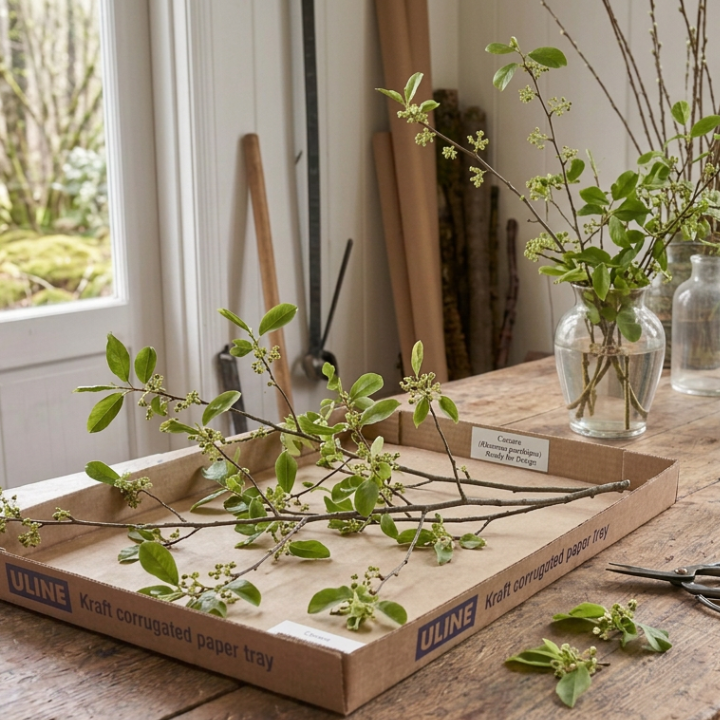
(Frangula purshiana)
Layered branching · Tonal depth · Woodland architecture
Cascara is valued for its refined branching structure, subtle tonal shifts, and the quiet architectural presence it brings to branch-led compositions throughout multiple seasons.
- Seasonal availability: Fresh green branching in spring and early summer; yellow-to-amber foliage movement in autumn; bare structural line through winter.
- Design temperament: Lightly layered branching with natural asymmetry and soft directional movement. Useful for creating depth, transitional structure, and woodland rhythm without visual rigidity.
- Behavior: Holds openness while still contributing structural presence. Seasonal color transitions and fine branching detail make cascara particularly effective in tonal palettes, negative-space work, and compositions emphasizing natural posture and movement.
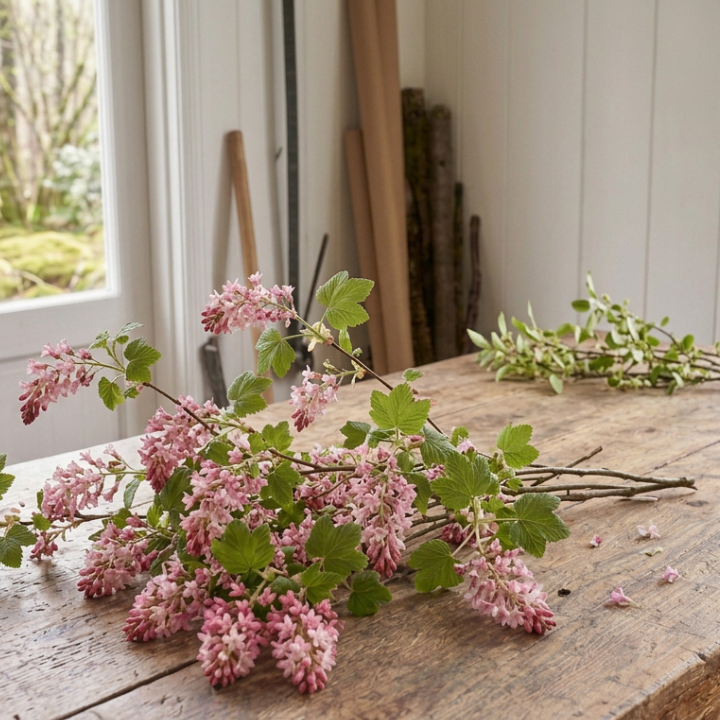
Red‑Flowering Currant
(Ribes sanguineum)
Pendulous bloom · Spring rhythm · Woodland color
Red-flowering currant is valued for its suspended bloom clusters, soft branching movement, and early seasonal color emerging against the subdued structure of late winter and early spring woodland materials.
- Seasonal availability: Late winter into spring bloom, followed by fresh green branching and foliage emergence.
- Design temperament: Arching to lightly cascading branching with pendulous floral movement and moderate visual softness. Useful for introducing color, seasonal transition, and layered movement into branch-led compositions.
- Behavior: Adds rhythm and suspended focal movement without excessive density. Particularly effective alongside evergreen structure, early understory materials, and restrained spring palettes where openness and seasonal pacing remain central.
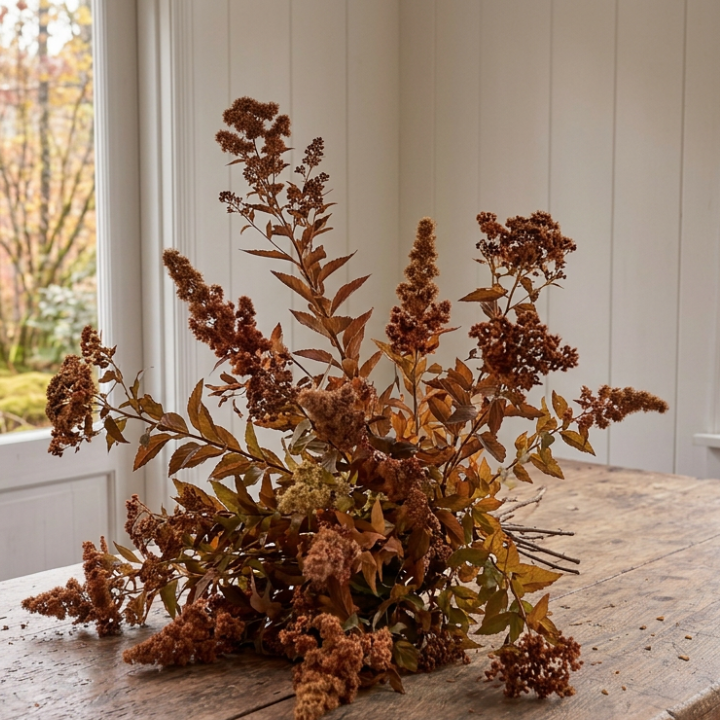
Douglas Spirea
(Spiraea douglasii)
Vertical plume · Meadow texture · Seasonal lift
Douglas spirea is valued for its upright flowering structure, fine-textured foliage, and ability to introduce vertical movement without excessive visual weight.
- Seasonal availability: Fresh green growth in spring; flowering plumes from early through midsummer; warm-toned structural remnants extending into autumn.
- Design temperament: Vertical line with soft plume texture and moderate rhythmic repetition. Useful for adding lift, meadow-like movement, and layered seasonal texture within both structured and naturalistic compositions.
- Behavior: Creates height and atmospheric softness while maintaining openness between stems. Dried structures retain linear rhythm and muted texture, making the material useful beyond peak bloom periods.
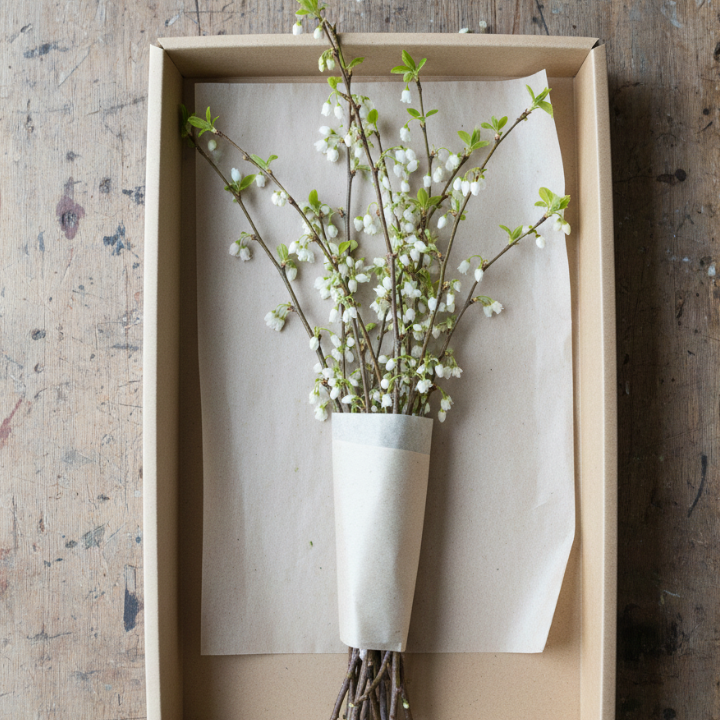
Snowberry
(Symphoricarpos albus)
Pearled fruit · Quiet rhythm · Autumn understory
Snowberry albus is valued for its pale suspended berries, fine branching structure, and muted woodland presence as the season moves deeper into autumn.
- Seasonal availability: Berry-bearing stems from late summer through autumn; persistent fruit and bare branching extending into early winter, depending on weather conditions.
- Design temperament: Fine-textured branching with soft berry distribution and understated tonal contrast. Useful for transitional palettes, negative-space compositions, and woodland work requiring quiet focal detail rather than dominant color.
- Behavior: Introduces suspended visual rhythm and gentle repetition without visual heaviness. Particularly effective alongside lichen, weathered wood, evergreen structure, and branch-led autumn compositions emphasizing restraint and atmospheric layering.
Leucothoe
(Leucothoe fontanesiana)
Arched evergreen · Weighted line · Understory calm
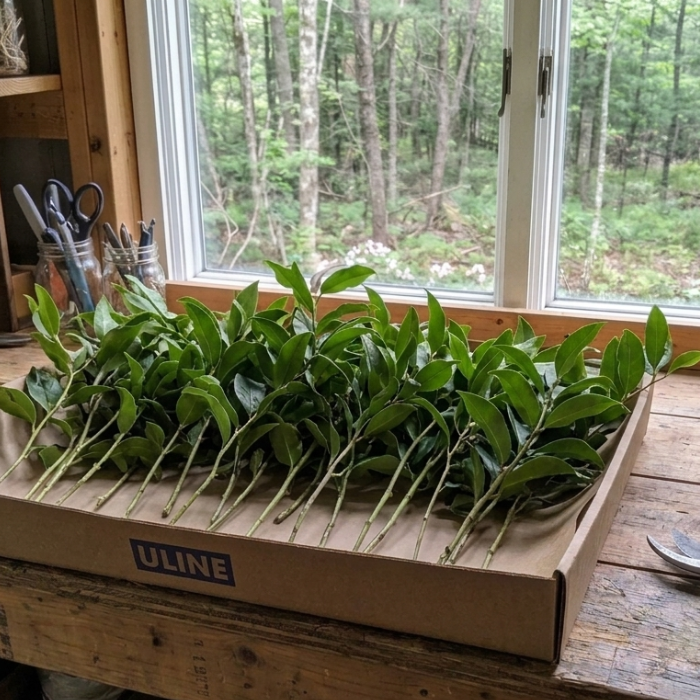
Leucothoe is valued for its arching evergreen structure, glossed foliage, and quiet, weighted line. Stems hold a natural downward sweep that introduces calm, grounded movement — a soft architectural arc shaped by shade, moisture, and understory patience. Its foliage reads as tonal continuity rather than mass, offering depth without heaviness and a refined woodland silhouette.
- Seasonal availability: Evergreen presence through winter; deep green stability in early spring; subtle tonal shifts in summer; warm, burnished foliage notes in autumn.
- Design temperament: Weighted arc with controlled movement. Excellent for grounding, anchoring points, soft negative-space framing, and adding quiet architectural clarity to compositions.
- Behavior: Holds moisture and form exceptionally well. Maintains color, structure, and posture in vase work. Functions as a stabilizing understory material — offering evergreen structure that pairs with sculptural stems, branch architecture, and seasonal ephemera without competing for attention.
Heuchera
(Heuchera spp.)
Grounded foliage · Soft structure · Understory calm
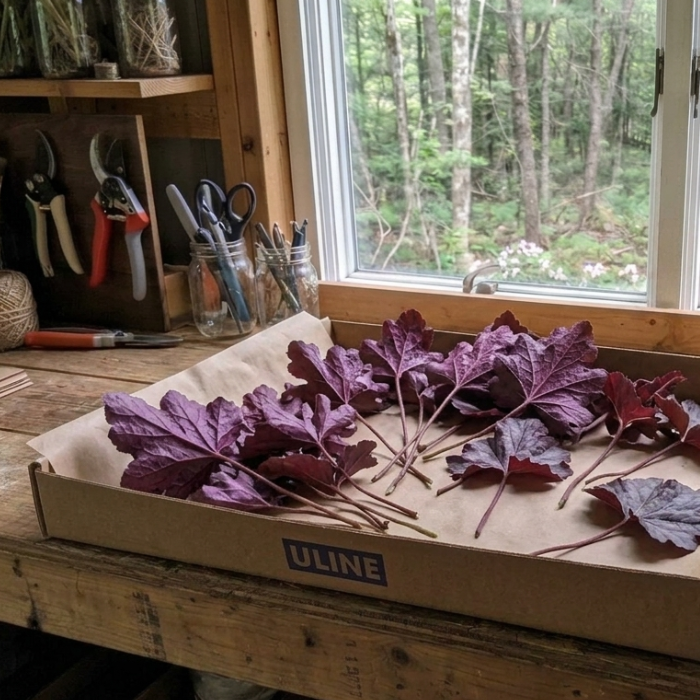
Heuchera is valued for its low, architectural foliage and quiet, grounding presence. Leaves form a steady, textural canopy that settles the composition, offering a calm base beneath expressive stems and branch architecture. Its silhouette reads as soft structure — a composed woodland form shaped by moisture, shade, and the slow patience of the forest floor.
- Seasonal availability: Evergreen or semi‑evergreen presence through winter (varies by cultivar); fresh, saturated foliage in early spring; strengthened color and contour through autumn.
- Design temperament: Grounding mass with refined contour. Useful for anchoring points, softening transitions, supporting negative space, and adding tonal harmony without visual weight.
- Behavior: Holds moisture and color exceptionally well. Provides grounding and atmospheric calm beneath line‑driven compositions. Functions as a stabilizing understory material — offering quiet rhythm, subtle texture, and a composed woodland presence that complements sculptural stems and seasonal ephemera.
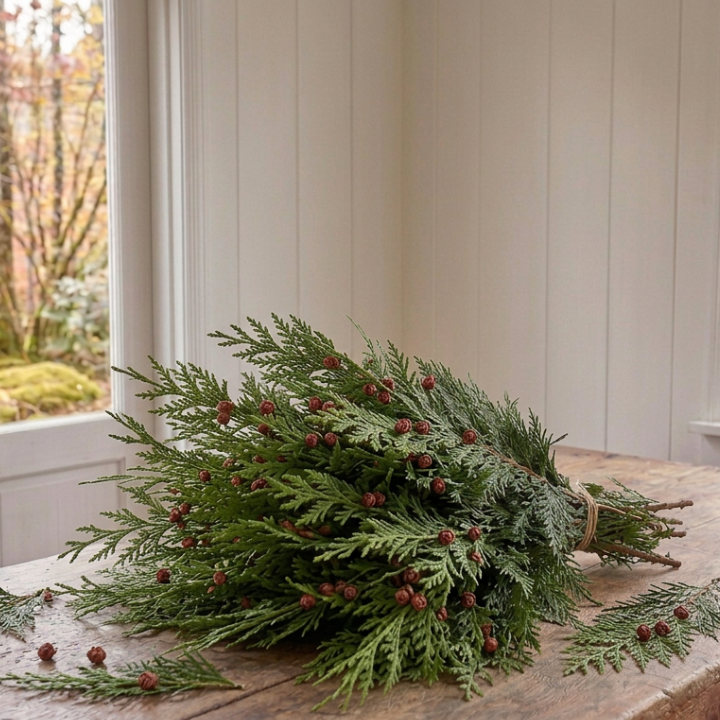
Western Red
Cedar Tips
(Thuja plicata)
Evergreen backbone · Aromatic texture · Winter structure
Western red cedar is valued for its layered evergreen sprays, flexible drape, and ability to establish depth and structural continuity throughout the colder woodland seasons.
- Seasonal availability: Most actively harvested from autumn through early spring during periods of strongest evergreen presence.
- Design temperament: Softly cascading evergreen structure with fine-textured surface movement and muted tonal depth. Useful for establishing backbone, visual continuity, and atmospheric layering within branch-led work.
- Behavior: Holds moisture and posture well when conditioned carefully. Adds dimensional softness and woodland density without overwhelming surrounding materials. Particularly effective alongside bare branching, berries, lichen, and restrained winter palettes.
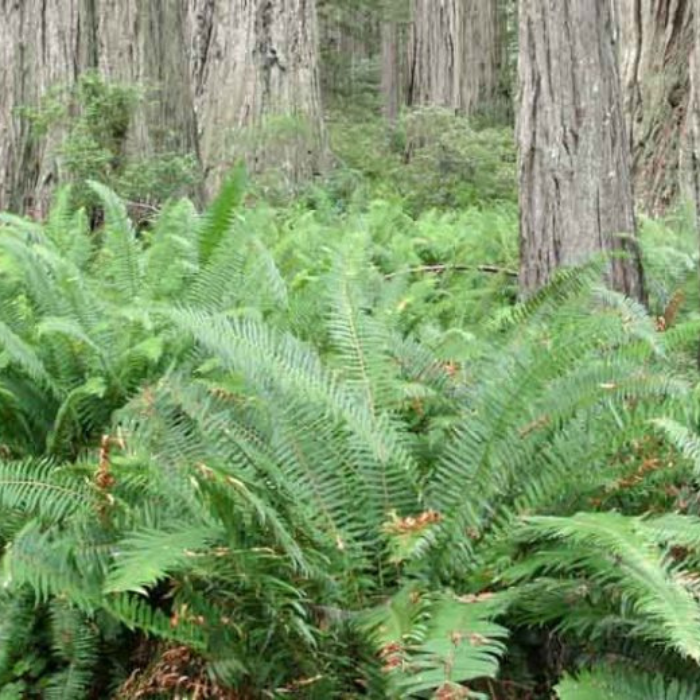
Western Sword Fern
(Polystichum munitum)
Evergreen structure · Architectural grounding · Autumn persistence
Western sword fern is valued for its upright evergreen architecture, matte tonal depth, and the quiet structural grounding it brings to branch‑led woodland compositions. Mature crowns — particularly those in long‑undisturbed understory zones — produce strong, architectural fronds that hold posture, color, and evergreen weight deep into autumn.
- Seasonal availability: Western sword fern provides evergreen structure from early autumn through late spring, holding posture, color, and architectural clarity throughout the atelier’s active season. Fresh fronds emerge in early spring after crown cleanup, while mature fronds offer their strongest grounding value in September–November.
- Design temperament: Upright evergreen structure with matte surface texture and quiet tonal depth. Useful for grounding compositions, establishing evergreen weight, and supporting negative space without visual heaviness — similar to how Thuja offers evergreen backbone and layered depth within winter palettes.
- Behavior: Holds moisture and form exceptionally well, consistent with evergreen understory materials such as Leucothoe, which maintains color, structure, and posture in vase work.
Seasonal Palette Studies
These combinations illustrate how woodland materials interact compositionally through structure, movement, tonal contrast, and seasonal pacing.
Winter Structural Palette
- Cornus sericea — saturated winter line
- Thuja plicata — evergreen depth and grounding
- Leucothoe — tonal evergreen movement
- Vine Maple — asymmetrical architectural branching
- Lichens — softened atmospheric texture
Useful for branch-led ceremony structures, restrained editorial work, winter installations, and compositions emphasizing negative space and structural clarity.
Spring Ephemeral Palette
- Oemleria — first bloom and woodland lift
- Ribes — pendulous movement and seasonal color
- Cascara — fresh branching structure
- Heuchera — grounding foliage layer
- Corylus — suspended catkin texture
Useful for airy spring palettes, transitional seasonal work, movement-led installations, and compositions requiring openness with gentle directional rhythm.
Autumn Contrast Palette
- Snowberry — pale suspended fruit
- Holodiscus — dried seed architecture
- Spiraea — upright parchment-toned plumes
- Vine Maple — flame-toned structural clarity
- Lichens — muted woodland atmosphere
Useful for restrained autumn palettes, tonal editorial work, sculptural centerpieces, and compositions emphasizing quiet contrast and atmospheric layering.
The atlas documents what the woodland grows and how it behaves in design. When dates and palettes begin taking shape, the next step is a seasonal conversation about what the woodland can offer your specific project.
How to work with Woody Shoots →
Inquire about current seasonal availability →
Field‑guide reference: Washington State Department of Natural Resources – Natural Heritage Program.