PNW Native Botanical Stems for Floral Designers: Snowberry in October
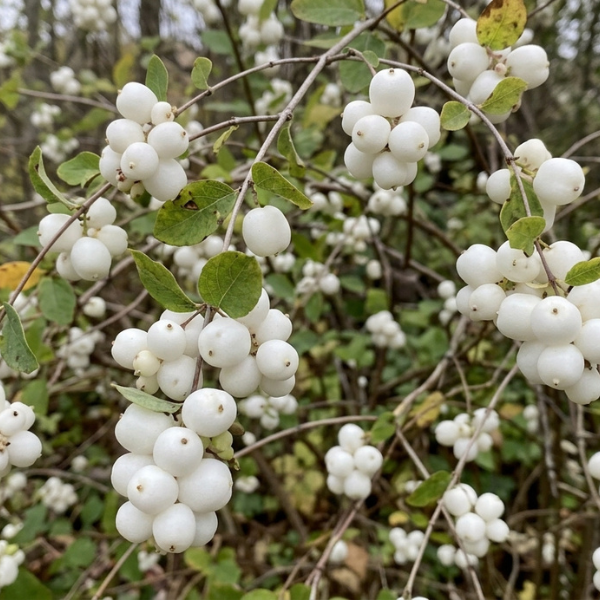
Snowberry (Symphoricarpos albus) is entering its strongest berry presence now — matte white clusters held lightly along open, gestural branching. In autumn work, it introduces tonal contrast without adding visual weight. It spaces the eye through branching rather than filling it. Among PNW native botanical stems for floral designers, few carry that much contrast with so little mass.
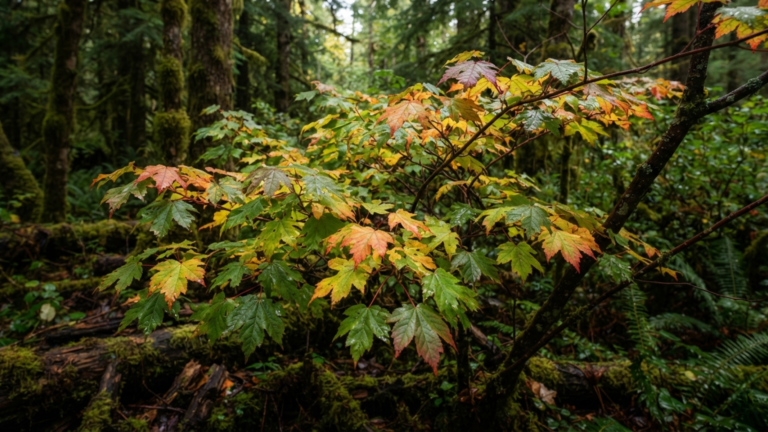
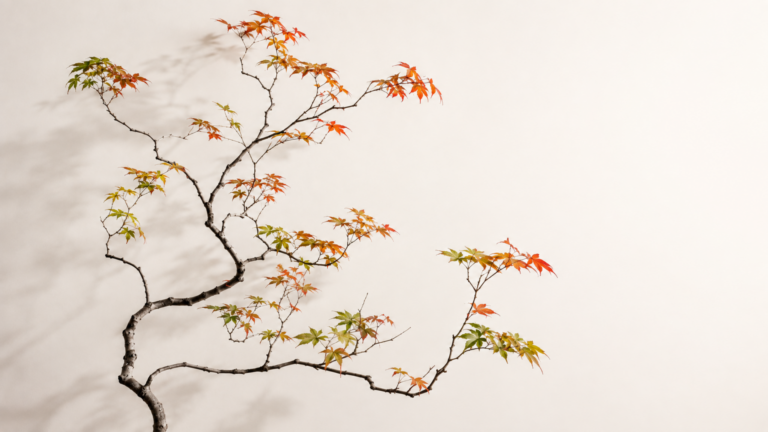
The woodland is moving toward deeper saturation. Vine maple (Acer circinatum) is turning, and the understory is settling into its autumn register. Snowberry marks the shift with clarity — berries that hover, branching that stays readable, a posture that stays light as the season darkens. Its matte finish behaves differently from cultivated berry stems, which tend toward gloss and density.
Material Character — Native Foliage for Floral Composition
Snowberry reads as a rhythmic element. The clusters sit at intervals along the branch, creating tonal punctuation without dominance. Its silhouette stays open, so a composition reads as spacious rather than crowded. The matte surface absorbs light rather than reflecting it. That keeps the stem legible in low-light installation work.
Seasonal Window — PNW Woodland Materials
October is the reliable window for snowberry on the 4.89-acre woodland. Berry clusters are fully formed, and the stems have matured. The window narrows as the weather turns. Heavy rain can soften berry texture. Early frost can thin cluster density. Availability follows that rhythm, not a fixed schedule.
Compositional Meaning — PNW Native Botanical Stems for Floral Designers
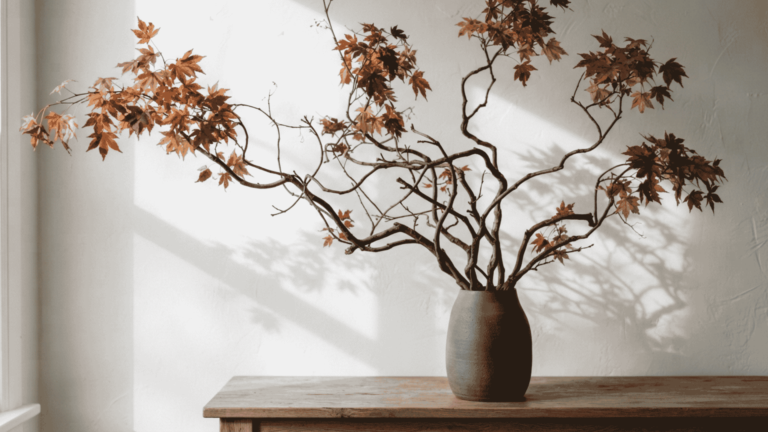
Snowberry introduces contrast without grounding the composition. It creates spacing, not mass. In branch-led work, it opens the upper line while denser materials hold the base. Against the warm turn of Acer circinatum, the white reads cooler and more exact.
Pairing Notes
- Acer circinatum (vine maple) — autumn leaf color against matte white; gesture balanced by berry punctuation
- Polystichum munitum (western sword fern) — grounds the base while snowberry keeps the upper line open
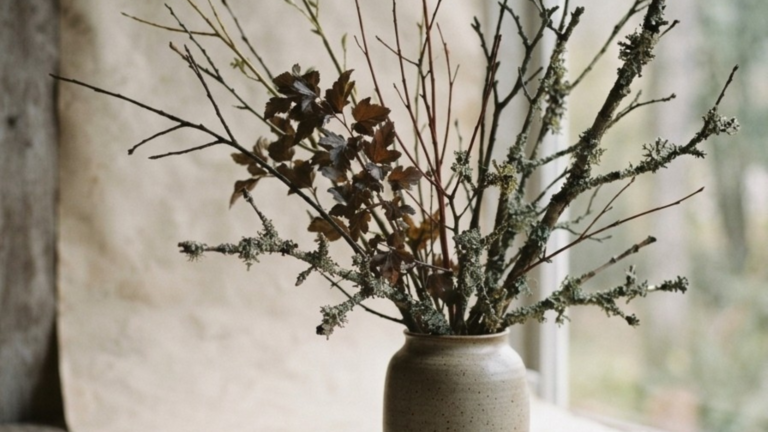
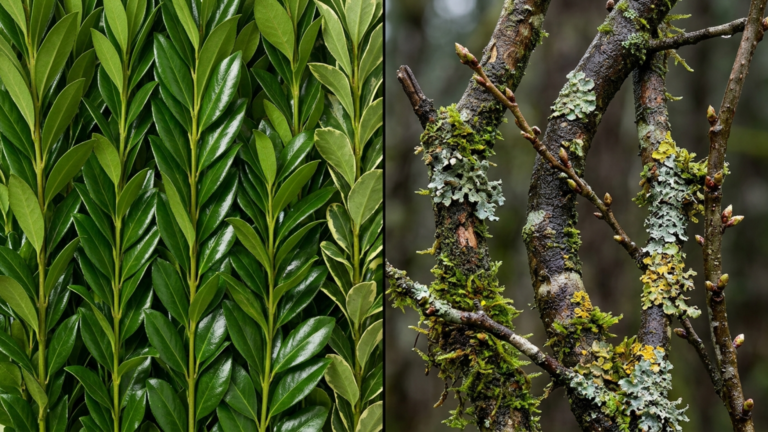
- Evernia prunastri (oakmoss lichen) — textural counterpoint without visual heaviness
Woodland Provenance
Snowberry grows along the woodland’s mid-slope edges, where filtered light and stable moisture support berry formation. Harvest is selective. Clusters are gathered only when mature and structurally sound. Stewardship decides how much is released at any moment. For botanical background on native species like snowberry, see the Washington Native Plant Society.
In October, the working question is often how to carry contrast without shifting a composition’s weight. Snowberry answers it plainly. Its seasonal window and design character are on the snowberry botanical page.