Unexpected September Blues — Cool‑Tone Woodland Material That Isn’t Hydrangea
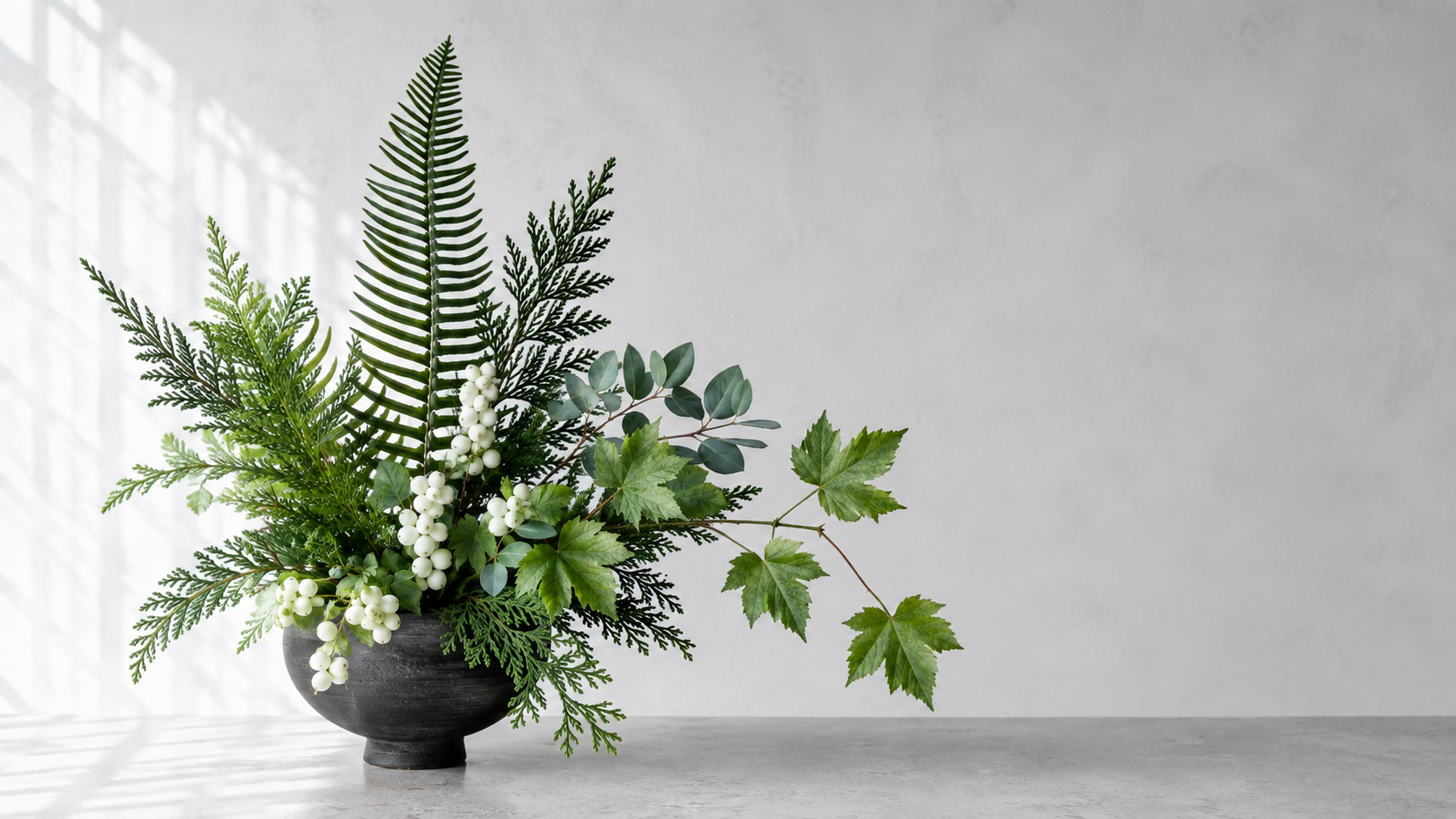
Snowberry (Symphoricarpos albus) is one of the clearest expressions of Pacific Northwest woodland foliage for designers in early September — its matte white berries hovering within the branching rather than anchoring it.
Snowberry’s September Blue: Cool‑Tone Pacific Northwest Woodland Foliage for Designers Who Won’t Reach for Hydrangea
Snowberry (Symphoricarpos albus) carries a cool, matte clarity in early September — berries hovering within the branching rather than anchoring it. In compositions that need tonal contrast without added weight, this is often the material that establishes rhythm before anything else enters the vessel. The woodland is beginning its slow seasonal shift now, and the cool‑tone palette reflects that change — cedar, cascara, vine maple, and sword fern reading the light differently as nights cool. These are the materials that offer designers a quieter September blue without reaching for hydrangea.
Snowberry — Cool‑Tone Clarity Without Weight
Snowberry’s berries read as suspended rather than fixed — a matte white that introduces tonal contrast without visual heaviness. In early September, clusters are firm and photogenic, holding their presence cleanly in both vessel work and installation-scale branching. Among Pacific Northwest woodland foliage for designers, snowberry is often the first cool‑tone signal of the season.
Cedar Tips — Deep Evergreen Structure
Western red cedar (Thuja plicata) offers a grounded cool green that supports posture and line. Its evergreen structure reads as quiet architecture rather than filler, giving designers a stable tonal base. Cedar pairs naturally with snowberry and sword fern, creating a restrained palette that stays readable in low September light.
Vine Maple — Early-Season Cool Green
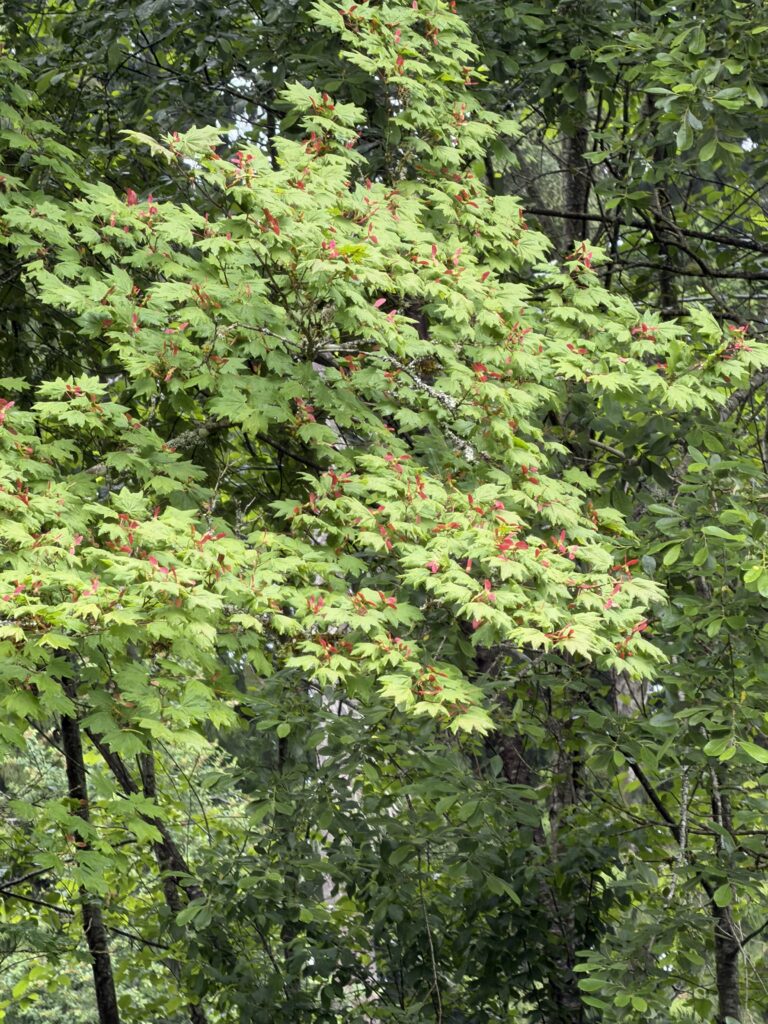
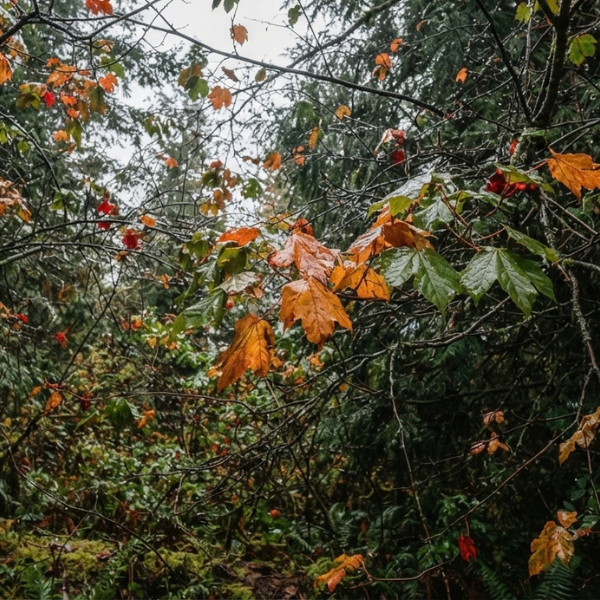
Vine maple (Acer circinatum) holds a refined cool green before its autumn shift. The branching is gestural and open, offering negative space that keeps compositions from collapsing into density. In September work, vine maple often becomes the material that carries movement.
Cascara — Subtle Blue-Green Undertones
Cascara (Frangula purshiana) catches September light with a desaturated, almost blue-green surface. The leaves read quietly, supporting compositions where tone matters more than texture. Cascara’s branching stays flexible, letting designers build direction without rigidity.
Western Sword Fern — Sculptural Evergreen Cool Tone
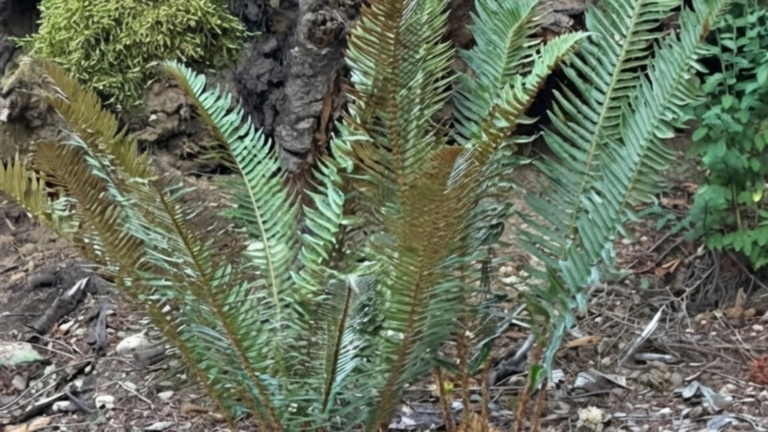
Western sword fern (Polystichum munitum) brings layered evergreen depth without anchoring the composition. The fronds arc naturally and hold that arc, creating three-dimensional clarity. In early September, the fronds remain firm and architectural — a woodland constant that reads cool even as surrounding foliage begins its seasonal transition.
Woodland Lichens & Mosses — Atmospheric Cool Neutrals
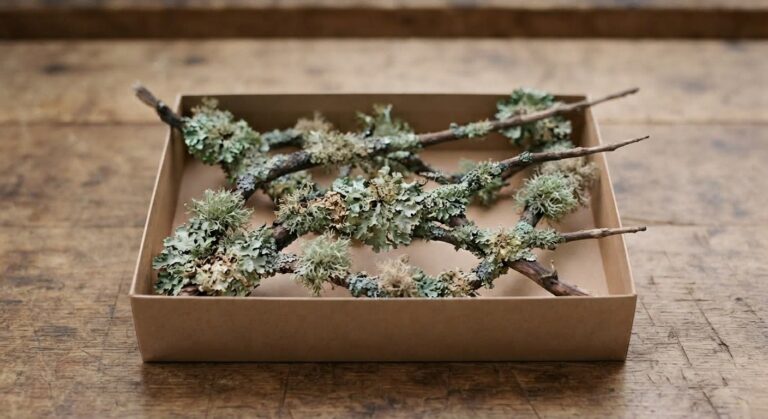
Oakmoss (Evernia prunastri) and soft woodland mosses introduce quiet cool neutrals. They are not focal materials; they are atmospheric ones. Even in small amounts, oakmoss alters the visual temperature of a composition — a named detail that opens a larger world.
Why These Cool‑Tone Materials Matter in September
As the woodland shifts toward autumn, cultivated garden materials often take on warmer tones. The cool‑tone palette offered by snowberry, cedar, cascara, vine maple, and sword fern helps designers maintain clarity and restraint. These materials photograph cleanly, hold form, and offer a sculptural alternative to hydrangea during the early fall transition.
September seasonal botanicals →
Inquire about a cool-tone woodland pull →
Designers who want a broader context for how color influences compositional tone can explore Penn State Extension’s overview of garden color selection: https://extension.psu.edu/choosing-colors-in-the-garden-to-attract-pollinators.

One Comment
Comments are closed.