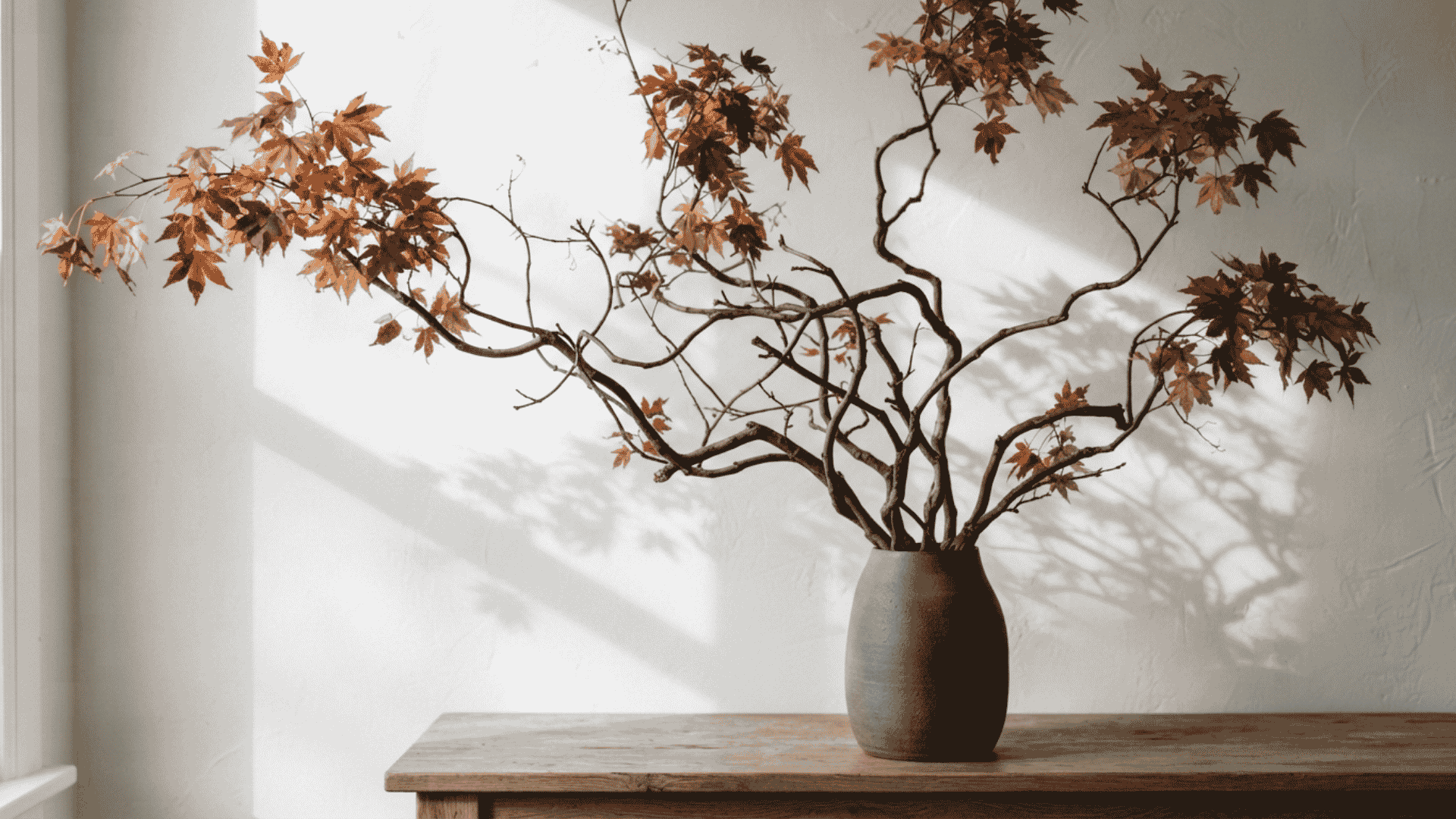
Negative Space in Woodland Design: How Snohomish County Designers Use Shadow as a Material
Why the quiet parts of an arrangement often do the most work.
Negative space in woodland design gives Snohomish County designers a structural advantage: it turns shadow into a usable material that shapes gesture, atmosphere, and the quiet tension that defines PNW woodland work.
When space is handled with intention, the composition feels sculptural, grounded, and unmistakably local. If you want to work with woodland materials that excel at negative space, inquire about availability.
Negative space isn’t absence. It’s structure. It’s the pause that makes the gesture legible.
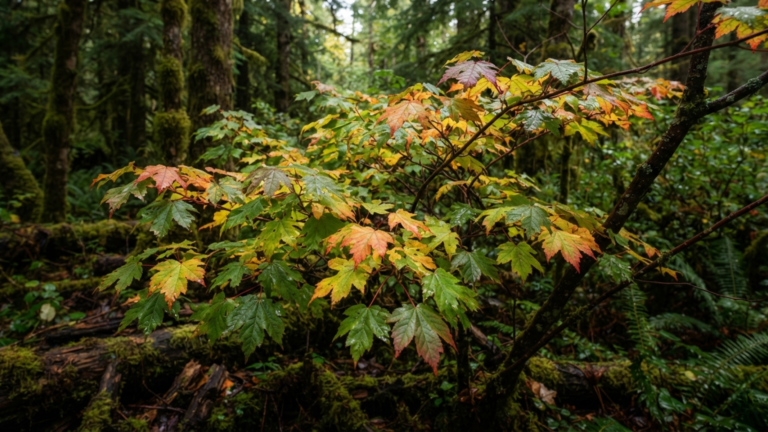
In our region — where understory plants cast articulate shadows and branches carry natural curvature — negative space becomes a local advantage. PNW botanicals want to breathe.
Where Shadow Becomes a Design Tool, Not a Byproduct
Negative space isn’t absence. It’s structure. It’s the pause that makes the gesture legible.
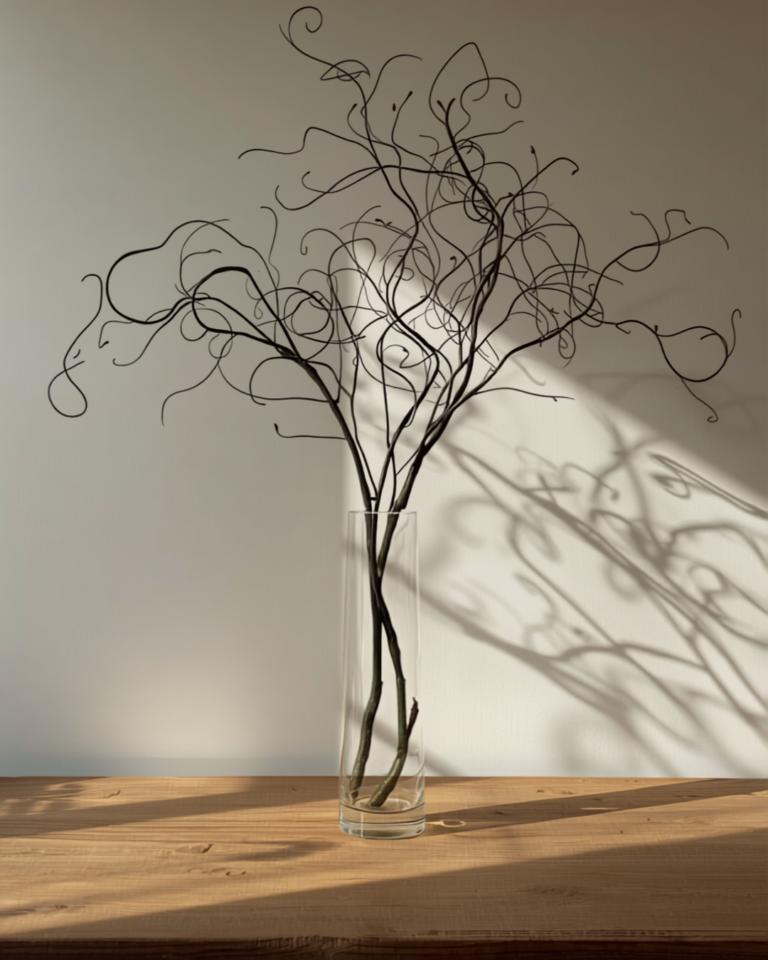
In the Pacific Northwest — where understory plants cast articulate shadows and branches carry natural curvature — shadow becomes one of the most expressive materials available to designers. In Arlington’s soft northern light, a single branch can throw a silhouette that feels architectural. The shadow becomes the echo that gives the stem its presence.
Designers across Snohomish County use shadow intentionally to:
- define the gesture of a sculptural branch
- create atmosphere without adding visual weight
- build tension between what’s seen and what’s suggested
- shape the viewer’s eye path through an installation
Shadow is the quiet half of the story.
In woodland work, shadow is a material — not an accident.
Why Negative Space Behaves Differently in the PNW
Negative space in the Pacific Northwest is not minimalism. It’s clarity.
Our region’s woodland materials carry weight, shadow, and moisture in a way that makes restraint feel intentional rather than sparse. When designers leave space around a stem, they’re not creating emptiness — they’re revealing structure.
The cool northern light sharpens silhouettes. The evergreen canopy softens contrast. The subdued palette allows shadow to become usable. Understory light →
PNW botanicals want to breathe. When you give them room, they tell the story.
Why PNW Woodland Materials Excel at Negative Space
Our region’s botanicals are naturally suited to this kind of work:
- Vine maple with its articulate branching
- Willow and hazel with their long, flexible lines
- Understory stems that hold shape without crowding
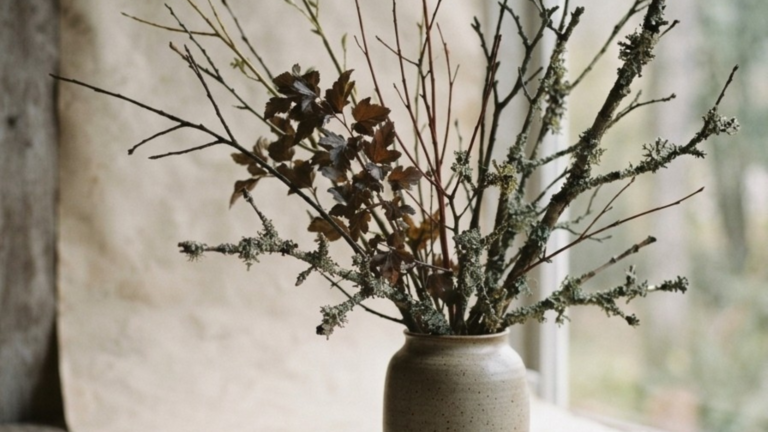
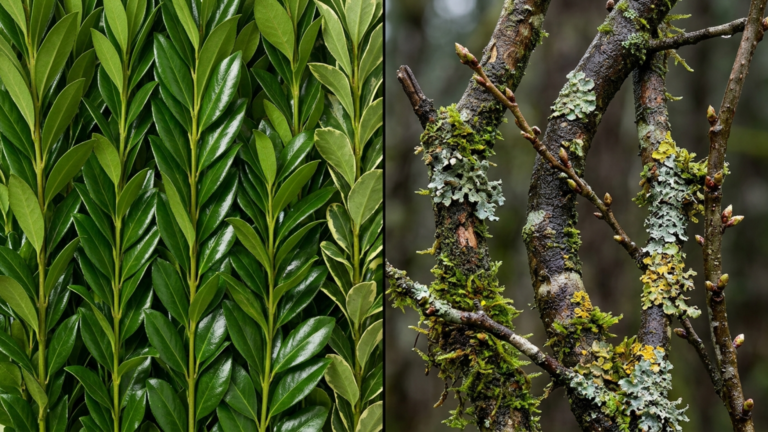
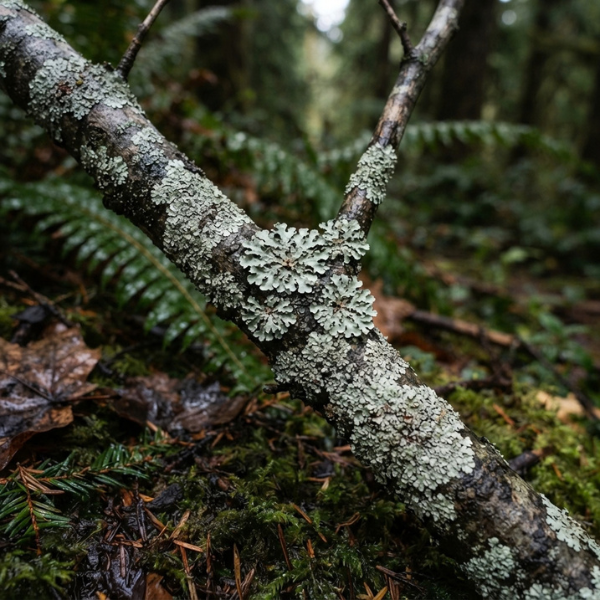
- Branches with patina or lichen that add subtle texture without bulk
These materials don’t compete for attention; they create the room where attention can land.
Designers who work with woodland botanicals quickly learn that restraint is not doing less — it’s doing more with intention.
How Snohomish County Designers Build Atmosphere Without Adding Clutter
Negative space is especially valuable in event environments, where installations must be impactful without overwhelming the room.
Local designers use negative space to:
- Scale up without adding mass
- Create mood in low-light venues
- Let architectural features breathe
- Make color feel intentional, not loud
A single branch placed with precision can do more than a bucket of blooms.
A Simple Practice: Let the Stem Decide the Space
One of the most effective techniques in woodland design is also the simplest:
Place the stem. Stop. Let the space around it tell you what comes next.
Instead of filling gaps, designers in the North Sound often protect them — treating negative space as a material with its own integrity.
This is where woodland design lives: in the quiet, in the shadow, in the restraint that feels intentional rather than sparse.
Designing With Less —
and Getting More From the Season
PNW materials aren’t generic. They carry sculptural lines that invite restraint, moody undertones that deepen a palette, and a kind of living presence that reveals itself in shadow.
When designers in Arlington, Stanwood, and the wider Snohomish County region choose to work with space, shadow, and gesture, they’re not doing less. They’re doing more with intention.
The result is work that feels:
- quiet
- sculptural
- seasonal
- true to the land
This is the heart of woodland design in Snohomish County — shaped by shadow, guided by space, and grounded in the character of our PNW botanicals.
Designer Resources
- Species Pages: Vine Maple · Cascara · Hazel · Willow
- Contact: Begin a conversation about seasonal woodland materials
- How We Work: Appointment-only, small-circle model
- Woodland Materials Guide →
If your work depends on sculptural lines, atmospheric shadow, and the clarity that negative space makes possible, inquire about current seasonal availability. Woodland materials from this region offer designers a structural vocabulary that commercial stems cannot replicate — and they are available in limited quantities each season.

One Comment
Comments are closed.