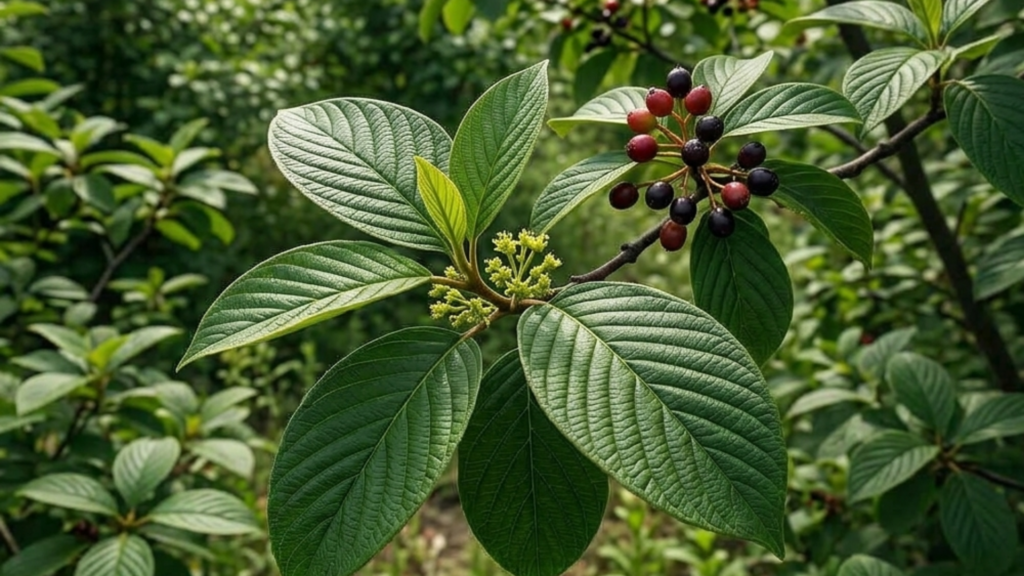
Movement: a designer’s guide
Woodland movement is the forest’s quiet choreography — the way stems lean, arc, and adjust themselves in response to filtered light, obstacles, and opportunity. For floral designers, understanding movement reveals how materials carry intention, direction, and emotional tone into a composition. Movement is not a quality added to a stem. Rather, it is a quality earned slowly through seasons of reaching, bending, and settling in the understory.
What movement is
Movement is the visible record of how a plant has responded to its environment. It is shaped by light, space, competition, and the forest’s shifting conditions. Because no two plants occupy exactly the same position in the canopy, no two stems express movement in exactly the same way. Instead, each stem carries its own directional history — a quiet record of arcs, leans, bends, and asymmetries accumulated across seasons of growth.
This is what separates woodland movement from the engineered gestures of cultivated stems. Furthermore, it is what makes native botanical materials irreplaceable for designers who build with intention rather than formula.
How Movement Forms in the Woodland
Movement develops through three overlapping forces — each leaving its signature on the stem’s final form.
Light as the Primary Force. Filtered understory light creates directional growth. Stems reach toward canopy openings, producing elegant lines and subtle curves shaped by the angle and intensity of available illumination. The Understory Light: A Designer’s Guide explores this relationship in depth.
Obstacles and Openings. Branches bend around neighboring plants, fallen logs, and shifting canopy patterns. As a result, each stem develops a conversational relationship with its immediate environment — its curves and angles a direct response to what surrounded it as it grew.
Seasonal Influence. Winter storms, snow load, spring growth spurts, and summer drought all leave their signature on movement. In particular, the cold-season structural materials at Woody Shoots carry the most visible record of seasonal force — their bends and leans shaped by years of weather rather than weeks in a growing tunnel.
The Designer’s Lens — Reading Movement
Every stem carries a story of how it moved through space. Designers who learn to read that story gain access to a level of material intelligence that no catalog description can provide.
The direction a stem leans indicates its strongest light source. An arc reveals seasonal or spatial influence that shaped its growth over time. Twisting shows evidence of competition or constraint from neighboring growth. When a stem straightens, the plant regained access to light after a period of obstruction. Softness at the surface — where moisture, filtered shade, or cool understory air left their mark — signals atmospheric influence on texture and finish.
Reading these qualities before placing a stem changes how a composition develops. Moreover, it transforms sourcing from a procurement act into a design act — one that begins in the woodland rather than at the worktable.
Applying Movement in Design
Understanding woodland movement changes how a designer builds. Rather than selecting stems for color or bloom, designers who work with movement choose materials for their directional energy — using arcs to guide the eye, leans to create asymmetry, and curves to introduce emotional tone.
Strong movement works best when paired with grounding materials that anchor the composition. In turn, grounding materials rely on movement to prevent them from reading as static or dense. The Woodland Grounding: A Designer’s Guide explores this relationship in detail.
Negative space is the final element of working with movement effectively. When a stem carries strong directional gesture, the space it moves through is as important as the stem itself. Allowing that space to remain open — rather than filling it with additional material — amplifies the gesture and lets the movement breathe.
Species That Express Movement Well
Some species carry woodland movement more visibly than others. The following materials from the Woody Shoots palette are particularly useful for designers learning to read and work with gestural line:
- Vine Maple — multi-directional arching branching shaped by filtered canopy light
- Cascara — asymmetrical gestural line developed through lateral light reach
- Osoberry — airy early-season branching with delicate directional movement
- Red Osier Dogwood — strong upright line with seasonal bends shaped by cold and storm load
- Young Cedar Growth — soft layered drape shaped by deep shade and moisture
For full species behavior documentation, visit the Woodland Species Atlas and Seasonal Botanicals. The Species Index organizes the full palette by behavioral group.
Movement is the woodland’s quiet choreography — a record of how plants navigate light, space, and season across years of growth. When designers understand movement, they begin to see how gesture shapes emotion, direction, and atmosphere in their work. The stem is not just a material.
It is a record of a life lived in filtered light.
Continue to Evergreen Structure: A Designer’s Guide to explore how movement relates to structural permanence.
For the regional ecological context, see forest ecology research by the University of Washington’s Halpern Lab.