Woodland Species Index
The Woodland Species Index is a working reference of stems shaped by understory light, slow growth, and the seasonal character of the Pacific Northwest woodland. It gathers the species that define the Woody Shoots palette — materials shaped by fir canopy, cedar shade, filtered morning light, and the quiet architecture of the understory.
This index is a living document that will grow as the woodland matures, reflecting how each species behaves in design through line, movement, grounding, atmosphere, and seasonal presence. For an overview of how Woody Shoots works with designers, see How We Work.
How to use this reference
This is a design-behavior index, not a horticultural manual. Each species is listed by botanical name for clarity, followed by a short note on gesture — how the stem moves or holds line — seasonal character covering bud, leaf, transition, and winter form, and design behavior describing how it performs in arrangements. The focus throughout is on structure, movement, and seasonal truth — qualities designers rely on when working with woodland materials.
Seasonal native botanicals for floral designers →
For deeper documentation of individual species — including conditioning protocols, pairing suggestions, and seasonal availability windows — visit the Woodland Species Atlas.
Seasonal line & gesture
As the seasons turn, woodland stems shift in posture, weight, and intention. Each carries a natural role — line that holds, movement that signals change, grounding that steadies, atmosphere that softens. This index gathers the stems by their behaviors, offering a quiet way to find what the moment calls for.

Line
Stems that create structure, silhouette, and architectural clarity.
Acer circinatum
Cornus sericea
Frangula purshiana
Spiraea douglasii
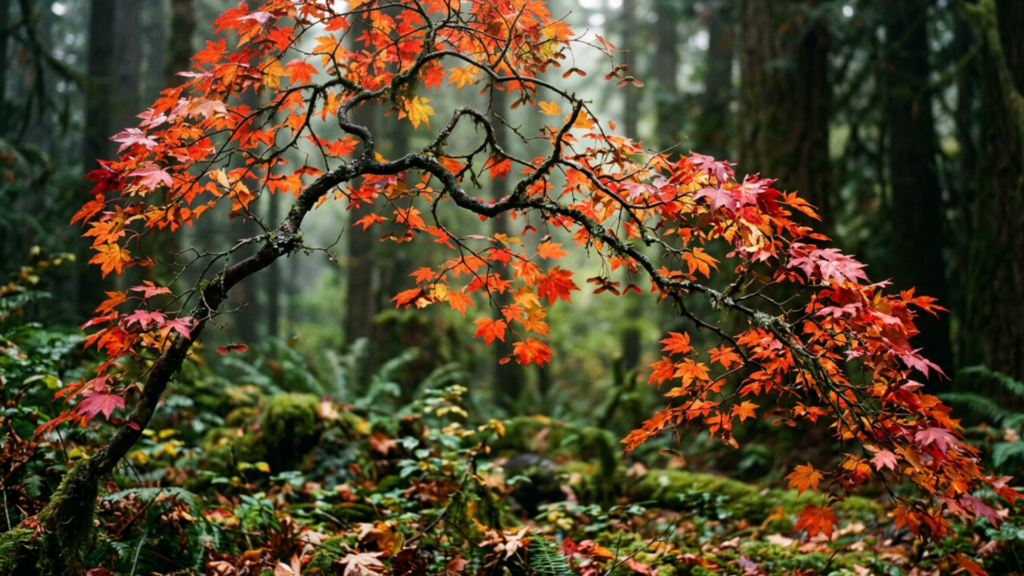
- Acer circinatum (Vine Maple) Expressive woodland line with multi‑directional branching; early spring structure and autumn color in filtered light.
- Cornus sericea (Red Osier Dogwood) Straight, bright winter stems; strong vertical line and clean structure in full sun.
- Frangula purshiana (Cascara) Tall, refined woodland line with soft, upright branching; quiet presence in filtered light.
- Spiraea douglasii (Douglas Spirea) Native sun‑field structure with upright plumes that dry into autumn seed architecture; strong vertical line and atmospheric texture in full sun.
For further context on how line functions in woodland composition, see Movement: A Designer’s Guide and Understory Light: A Designer’s Guide.

Movement
Stems that bring early‑season shift and soft animation.
Oemleria cerasiformis
Ribes sanguineum
- Oemleria cerasiformis (Osoberry) Earliest woodland movement with soft, pendulous clusters; signals the first shift of the season.
- Ribes sanguineum (Red‑Flowering Currant) Early spring color and light movement; arching stems that animate the woodland edge.
For further context on how movement develops in woodland stems, see Movement: A Designer’s Guide.
Grounding
Materials that anchor arrangements with weight, tone, or
evergreen presence.
Thuja plicata (tips)
Heuchera spp.
- Thuja plicata (Western Red Cedar — Tips) Evergreen grounding with quiet weight and woodland tone; holds structure through winter.
- Heuchera spp. Low, tonal foliage that anchors compositions; evergreen presence in filtered light.
For further context on how grounding functions in woodland composition, see Woodland Grounding: A Designer’s Guide and Evergreen Structure: A Designer’s Guide.
Atmosphere
Elements that create mood, texture, and woodland truth.
Symphoricarpos (all varieties)
Evernia prunastri + lichens
Holodiscus discolor
- Symphoricarpos (Snowberry — all varieties) Autumn berries with soft, atmospheric branching; holds tone and mood into winter.
- Evernia prunastri + woodland lichens True woodland atmosphere; soft, pale texture that carries seasonal truth.
- Holodiscus discolor (Ocean Spray) Native plume structure that dries into light autumn seed architecture; airy, upright texture along woodland edges.
For further context on how atmosphere develops through woodland materials, see the Woodland Behavior Glossary.
Evergreen Structure
Foliage that holds line and
tone through winter.
Leucothoe fontanesiana
Western Sword fern
- Leucothoe fontanesiana (Drooping Leucothoe) Evergreen broadleaf foliage with quiet, arching line; saturated winter tone in deep shade under fir and cedar.
For further context on evergreen structure in woodland composition, see Evergreen Structure: A Designer’s Guide.
Seasonal Ephemera
Short‑window materials
that mark transitions.
Corylus cornuta
- Corylus cornuta (Beaked Hazelnut) Late‑winter catkins with soft, atmospheric texture; sculptural branching that holds early‑spring line in filtered light.
For current ephemeral availability windows, visit the Seasonal Botanicals page.
woodland species index
winter – woodland architecture
Cornus sericea (Red Osier Dogwood) — winter line and saturated stem color; structural rhythm that holds in arrangements; strong presence in late winter and early spring.
Evernia prunastri + woodland lichens (Lichen on Fallen Branches) — atmospheric texture, soft green‑gray tone, and quiet woodland character; best in autumn and winter.
Leucothoe fontanesiana (Drooping Leucothoe) — evergreen broadleaf foliage with arching, woodland‑true gesture; saturated winter tone and refined early‑spring structure; thrives in deep shade under fir and cedar.
Symphoricarpos albus (Snowberry) — autumn ephemera with pale berries and soft branching; quiet winter structure after leaf drop.
Thuja plicata (Western Red Cedar — Tips) — evergreen structure, grounding texture, and deep woodland tone; reliable winter and early‑spring foliage.
Western Sword Fern (Polystichum munitum) — an evergreen silhouette that stays readable through winter; fronds rise in deliberate, sculptural planes designers can lean into for structure.
Late Winter / Early Spring – First Movement
Cornus sericea (Red Osier Dogwood) — winter line and saturated stem color; structural rhythm that holds in arrangements; strong presence in late winter and early spring.
Corylus cornuta (Beaked Hazelnut) — late‑winter catkins that bring soft, atmospheric texture in February; sculptural branching that holds line into early spring; native woodland structure shaped by filtered light.
Oemleria cerasiformis (Osoberry) — first green of the year; soft, ephemeral gesture; early‑spring movement that reads as woodland awakening.
Ribes sanguineum (Red‑Flowering Currant) — early‑season bloom with atmospheric line; spring movement and soft color that signal the shift out of winter.
Thuja plicata (Western Red Cedar — Tips) — evergreen structure, grounding texture, and deep woodland tone; reliable winter and early‑spring foliage.
Spring – Unfurling & Soft Structure
Acer circinatum (Vine Maple) — expressive understory architecture shaped by fir and cedar canopy; spring bud flush, summer green structure, autumn clarity, winter line. The West woodland edge produces multi‑directional gesture; the East side offers a refined vertical line.
Heuchera spp. (Foliage Varieties) — saturated understory foliage with seasonal shift; grounding color field for spring and autumn work.
Holodiscus discolor (Ocean Spray) — airy plume structure in late spring that dries into delicate autumn architecture; native understory presence with light, textural movement; seed heads offer quiet, atmospheric clarity.
Frangula purshiana (Cascara) — airy branching and native woody architecture; spring leafing and autumn transition offer subtle, expressive structure.
Autumn – Color & Woodland Ephemera
Acer circinatum (Vine Maple) — expressive understory architecture shaped by fir and cedar canopy; spring bud flush, summer green structure, autumn clarity, winter line. The West woodland edge produces multi‑directional gesture; the East side offers a refined vertical line.
Evernia prunastri + woodland lichens (Lichen on Fallen Branches) — atmospheric texture, soft green‑gray tone, and quiet woodland character; best in autumn and winter.
Holodiscus discolor (Ocean Spray) — airy plume structure in late spring that dries into delicate autumn architecture; native understory presence with light, textural movement; seed heads offer quiet, atmospheric clarity.
Spiraea douglasii (Douglas Spirea) — native sun‑field structure with upright plumes that dry into autumn seed architecture; strong vertical line and atmospheric texture in full sun.
Symphoricarpos albus (Snowberry) — autumn ephemera with pale berries and soft branching; quiet winter structure after leaf drop.
Botanical ranges and habitat references informed by the Washington State Department of Natural Resources.
Seasonal notes
The woodland palette shifts with the year in ways that matter for design planning. Late winter brings catkins, bare line, and early bud movement — the first signals of the season’s return. Spring follows with unfurling foliage, soft structure, and the first real color. July and August remain quiet at Woody Shoots — a pause for woodland recovery and stewardship. Autumn reopens the season with transition, clarity, and seed heads that carry the year’s accumulated texture. Winter strips the woodland to its bones — line, silhouette, and evergreen structure become the primary design language.
Understanding these seasonal cues helps designers plan for gesture, color, and atmosphere well in advance of their project windows.
design considerations
Woodland stems behave differently from field-grown materials because understory light shapes them differently. Rather than growing toward uniform illumination, they develop branching that is expressive rather than symmetrical, foliage that is saturated and slow-grown, stems that hold shape and dry with integrity, and seasonal shifts that read clearly in design work. As a result, compositions built with woodland materials feel grown rather than arranged — rooted in a specific place and season rather than assembled from interchangeable parts.
The Woodland Behavior Glossary and Materials Guide offer deeper context for reading and working with these qualities.
Related guides
The following resources support different parts of the designer’s process — from understanding material behavior to planning a seasonal pull:
- Woodland Materials Guide — how woodland stems behave in design and what weather writes into them
- Seasonal Botanicals — current availability mapped across the full seasonal calendar
- Woodland Species Atlas — full species documentation including conditioning, pairing, and design integration notes
- How We Work — the process from first inquiry through pickup
This index is a quiet record of the woodland — an evolving reference of stems shaped by place, season, and the slow architecture of understory growth. It will expand as the land matures and as new species join the palette.
When a project begins taking shape and the right materials start to come into focus, the next step is a seasonal conversation with Diane.
Inquire about current seasonal availability →