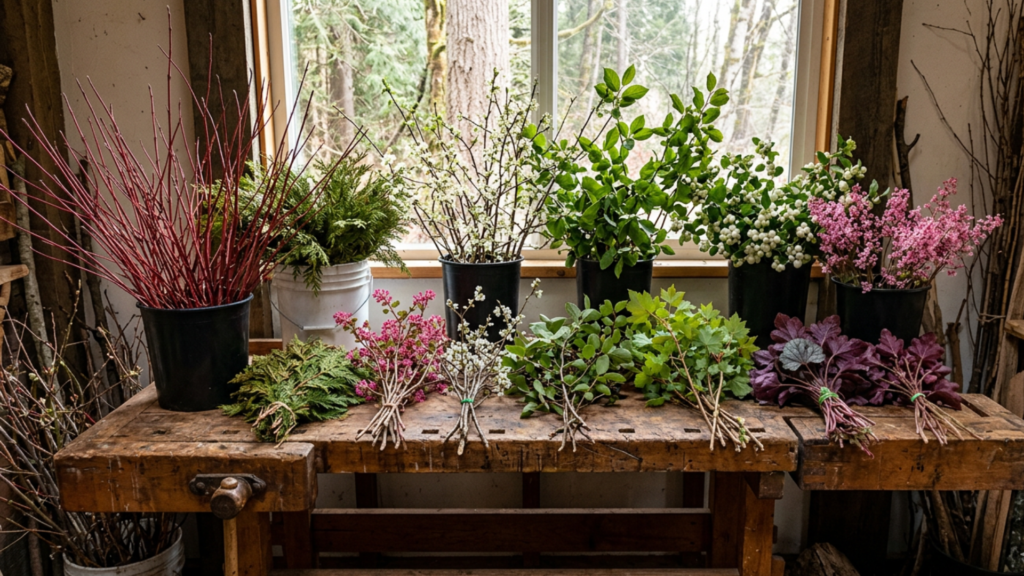
Seasonal botanicals
A seasonal library of Pacific Northwest native botanical materials gathered for floral designers, installations, and editorial work from a 4.89-acre working woodland in Arlington, Washington.
The collection includes native branching, cultivated companions, evergreen textures, understory foliage, berries, and woodland ephemera — selected by Diane Dixon for line, gesture, structure, and seasonal clarity. Nothing here follows a fixed production cycle. Instead, availability follows the woodland itself — its weather, its emergence rhythm, and the responsible harvest windows that keep the system healthy season after season.
Browse the library season by season to understand what the woodland tends to offer from autumn through spring. Because availability shifts with frost, rain, and seasonal transition, not every material is available at all times. Designers who maintain a seasonal conversation with Woody Shoots are the ones best positioned to access what the woodland offers — especially the fleeting materials that arrive briefly and cannot be held.
The woodland sets the tempo. These pages follow it.
Seasonal botanical material from the Woodland
Each season brings a different material language — winter structure, early emergence,
spring branching, autumn texture, and late-season woodland color.
winter – woodland architecture
Sculptural branching, bare line, weathered texture, and deep evergreen structure define the woodland through winter.
These materials create the framework of a composition — establishing posture, movement, tension, and negative space before bloom enters the conversation.
For a deeper understanding of how these materials behave in composition, visit the Woodland Behavior Glossary and Evergreen Structure: A Designer’s Guide.
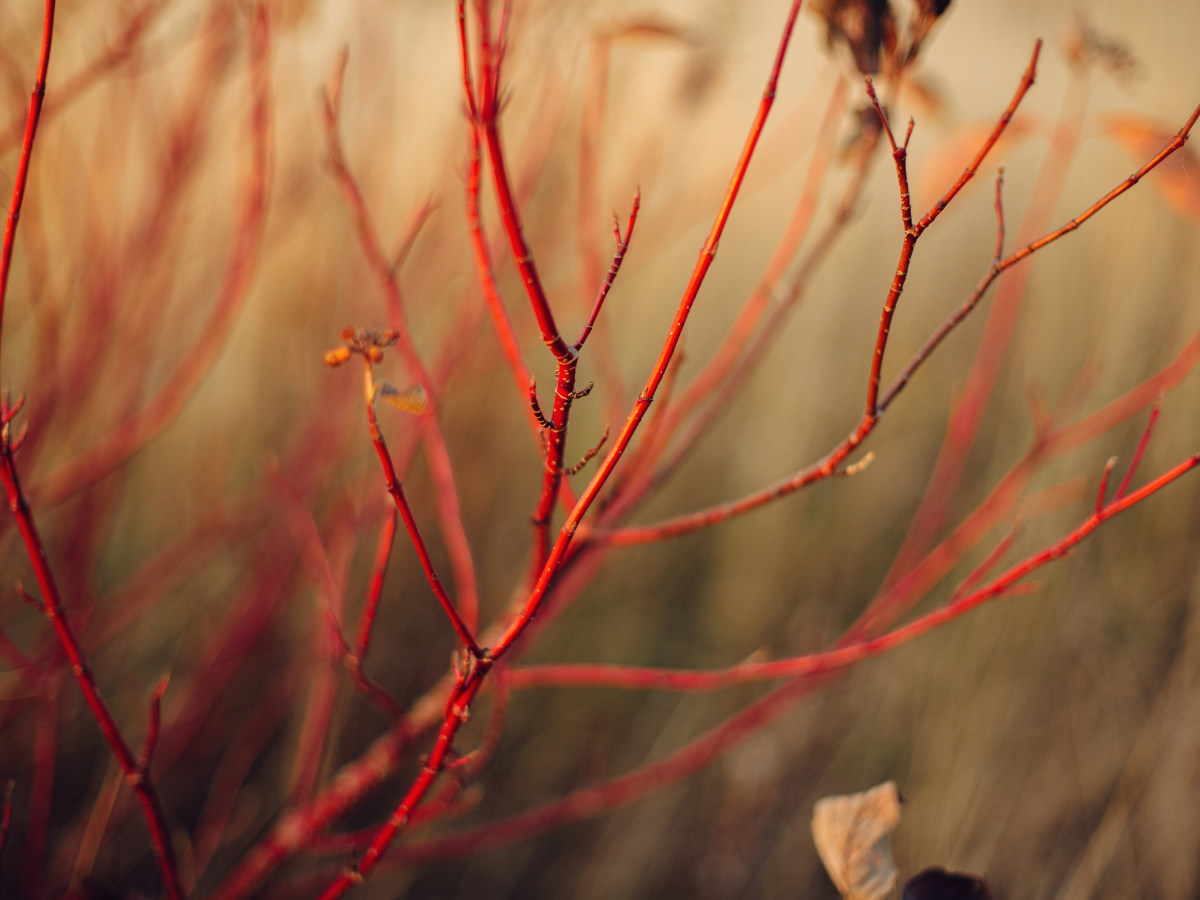
Cornus sericea
Red Osier Dogwood
Winter backbone for
the woodland palette.
Cut for line, saturation, and structure, Cornus carries the
cold-season architecture of the Pacific Northwest: deep burgundy stems, rhythmic branching, and strong vertical movement
that reads clearly even
in sparse compositions.
Especially useful in large-scale
work, entry pieces, and designs where gesture matters
more than fullness.
Seasonal Window
Late autumn through early
spring, when stem color deepens, and foliage has fully dropped.
Design Character
Architectural, rhythmic, strongly vertical. Reads clearly at distance and anchors larger compositions.
Works Especially Well In
Installation work, winter arrangements, vessel-forward compositions, and
branch-led designs.
Often Paired With
Vine maple, snowberry, evergreen textures, lichened branches,
and woodland moss.
Availability Rhythm
Released selectively through the cold season in small harvest windows depending on weather
and stem maturity.
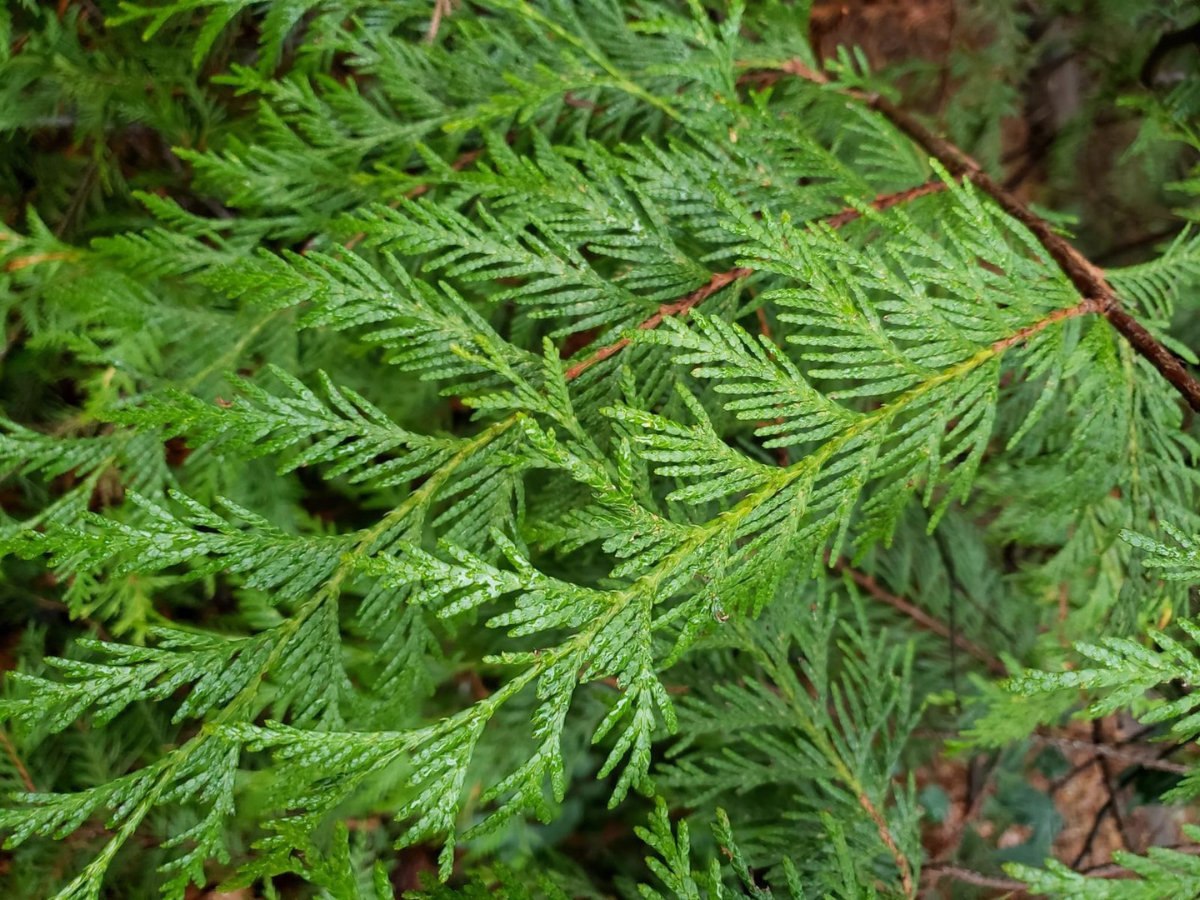
Thuja plicata
Western Red Cedar
A foundational woodland material —
aromatic, layered, and deeply
tied to the visual language
of the Pacific Northwest.
Western red cedar brings weight, drape, and quiet movement to a composition. Its flattened sprays create softness without fragility, offering depth and tonal grounding beneath more structural branches and early-season materials.
Especially valuable in winter work, large-scale installations,
and designs that call for
atmosphere without excess.
Seasonal Window
Available primarily from late autumn through early spring, with selective cutting throughout cooler months.
Design Character
Layered, textural, grounding. Creates depth, drape, and
soft directional movement
within a composition.
Works Especially Well In
Large-scale installations, winter arrangements, vessel work, ceremony structures, and woodland-driven palettes.
Often Paired With
Cornus, vine maple, snowberry, moss, evergreen textures, and
bare branching materials.
Availability Rhythm
Harvested selectively from mature woodland growth in limited quantities to preserve natural
form and long-term health.
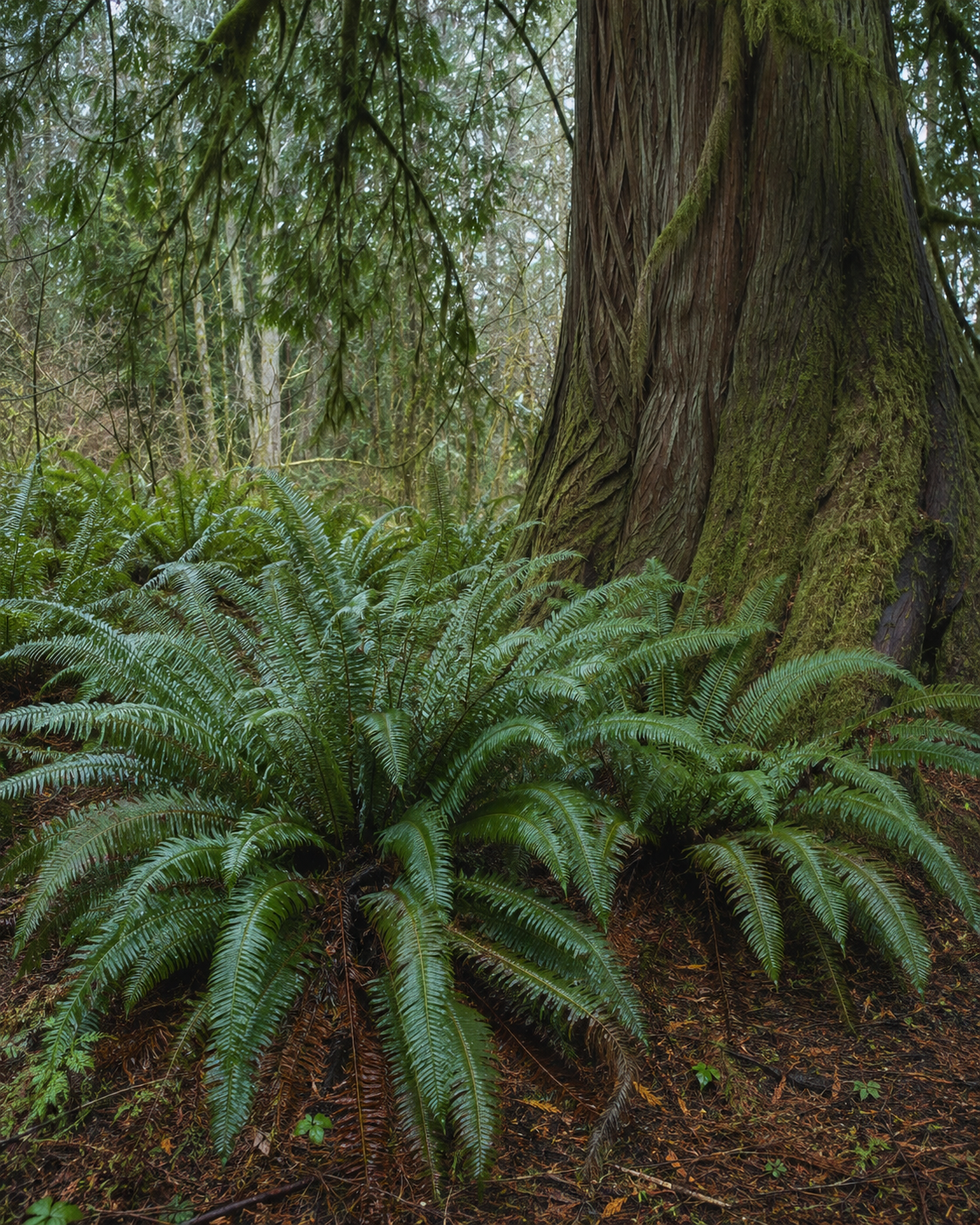
Western Sword Fern —
Polystichum munitum
A defining understory presence —
sculptural, evergreen, and deeply
rooted in the woodland language
of the Pacific Northwest.
Western sword fern brings posture, radial form, and quiet evergreen weight to a composition. Its upright fronds create clarity without harshness, offering grounding and textural stability beneath branch-led winter materials and early-season woodland elements.
Especially valuable in winter work, transitional arrangements, and designs that call for evergreen presence without excess.
Seasonal Window
Available primarily from late autumn through early spring, with strongest structure during cooler months.
Design Character
Evergreen, sculptural, grounding. Creates posture, depth, and quiet three-dimensional movement within a composition.
Works Especially Well In
Winter arrangements, woodland installations, vessel work, ceremony structures, and evergreen-driven palettes.
Often Paired With
Cornus, vine maple, osoberry, snowberry, moss, evergreen textures, and bare branching materials.
Availability Rhythm
Harvested selectively from mature crowns in limited quantities to preserve natural form and long-term health.
Late Winter / Early Spring – First Movement
Emerging growth softens evergreen textures, and the first-flowering branches begin to shift the woodland out of winter structure.
These early-season materials introduce lift, tonal transition, and subtle movement into compositions before spring fully opens.
The Understory Light: A Designer’s Guide explores how these transitional materials read in low and shifting light conditions.
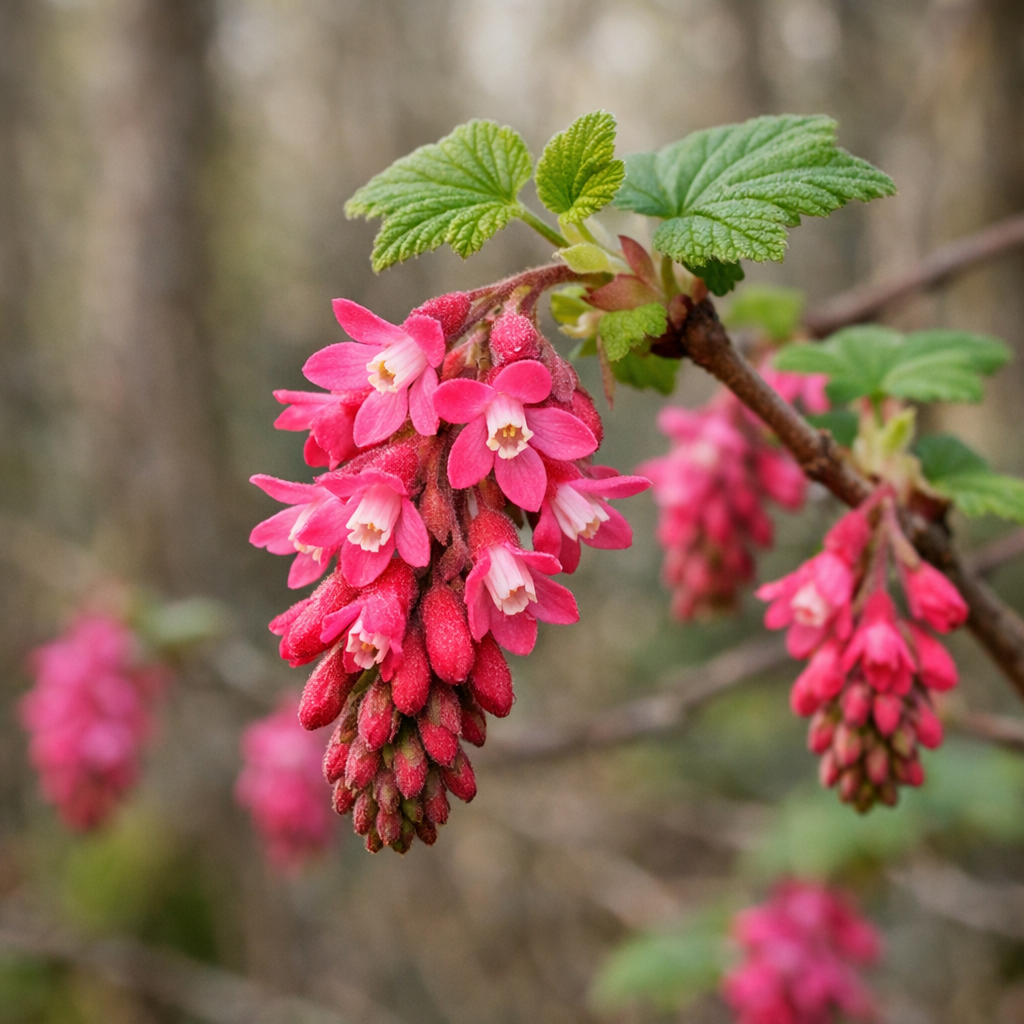
Ribes sanguineum —
Red‑Flowering Currant
One of the woodland’s first
clear signals of spring.
Ribes carries soft arching lines layered with pendulous
blooms that arrive before
the season fully settles in.
The branching remains light
and open, bringing movement,
color, and early-season
atmosphere without
visual heaviness.
Its fleeting nature is part of its value — offered briefly as the woodland shifts out of winter dormancy.
Seasonal Window
Early spring, typically
among the first flowering
woody stems to emerge.
Design Character
Airy, gestural, lightly cascading. Adds movement, softness,
and seasonal transition
to branch-led work.
Works Especially Well In
Early spring arrangements,
editorial installations,
asymmetric compositions,
and designs built around
negative space and
seasonal nuance.
Often Paired With
Osoberry, vine maple, moss, hellebore, early-flowering
branches, and muted
woodland textures.
Availability Rhythm
Released in short seasonal
windows based entirely
on bloom timing, weather,
and stem maturity.
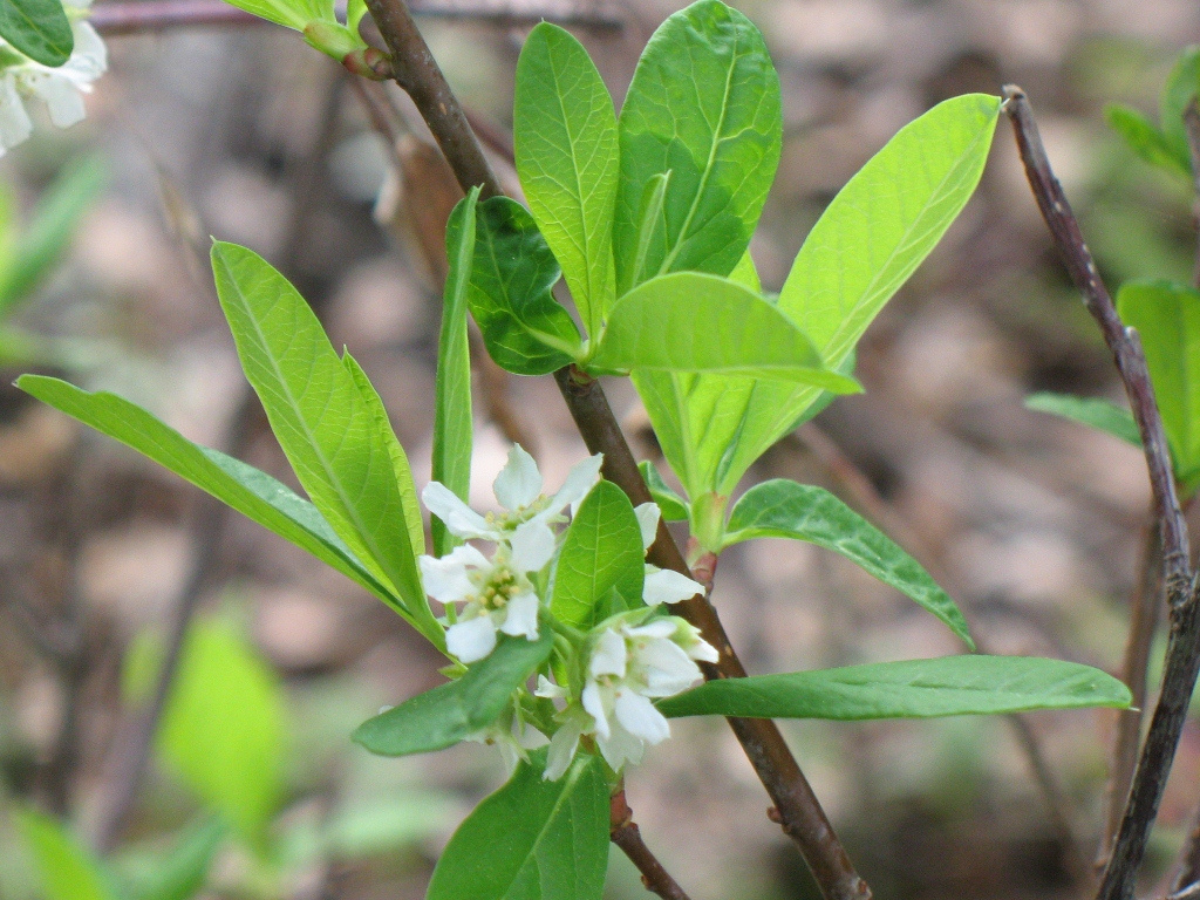
Oemleria cerasiformis
Osoberry
Among the earliest awakening
stems in the woodland.
Osoberry carries a quiet
looseness — slender branching
lined with soft green foliage and delicate flowering clusters that
emerge while much of the landscape still feels dormant.
Its value lies less in fullness and more in timing, movement,
and seasonal presence.
A transitional material
that brings lightness and
breath into early spring work.
Seasonal Window
Very early spring, often
appearing at the
threshold between
winter and spring.
Design Character
Light, airy, and loosely branching. Brings movement,
softness, and subtle seasonal texture to a composition.
Works Especially Well In
Early spring arrangements,
branch-led designs, restrained
palettes, and work centered
on seasonal transition.
Often Paired With
Ribes, vine maple, hellebore,
moss, flowering branches, and emerging woodland foliage.
Availability Rhythm
Available only briefly each spring
in small harvest windows tied closely to weather and
woodland progression.
Spring – Unfurling & Soft Structure
Fresh branching, unfolding foliage, and flexible line bring a lighter woodland structure into spring compositions.
These materials introduce lift, openness, tonal variation, and gentle movement while maintaining the natural posture and asymmetry that define the season.
The Movement: A Designer’s Guide and Woodland Grounding offer further context for working with spring’s gestural branching materials.
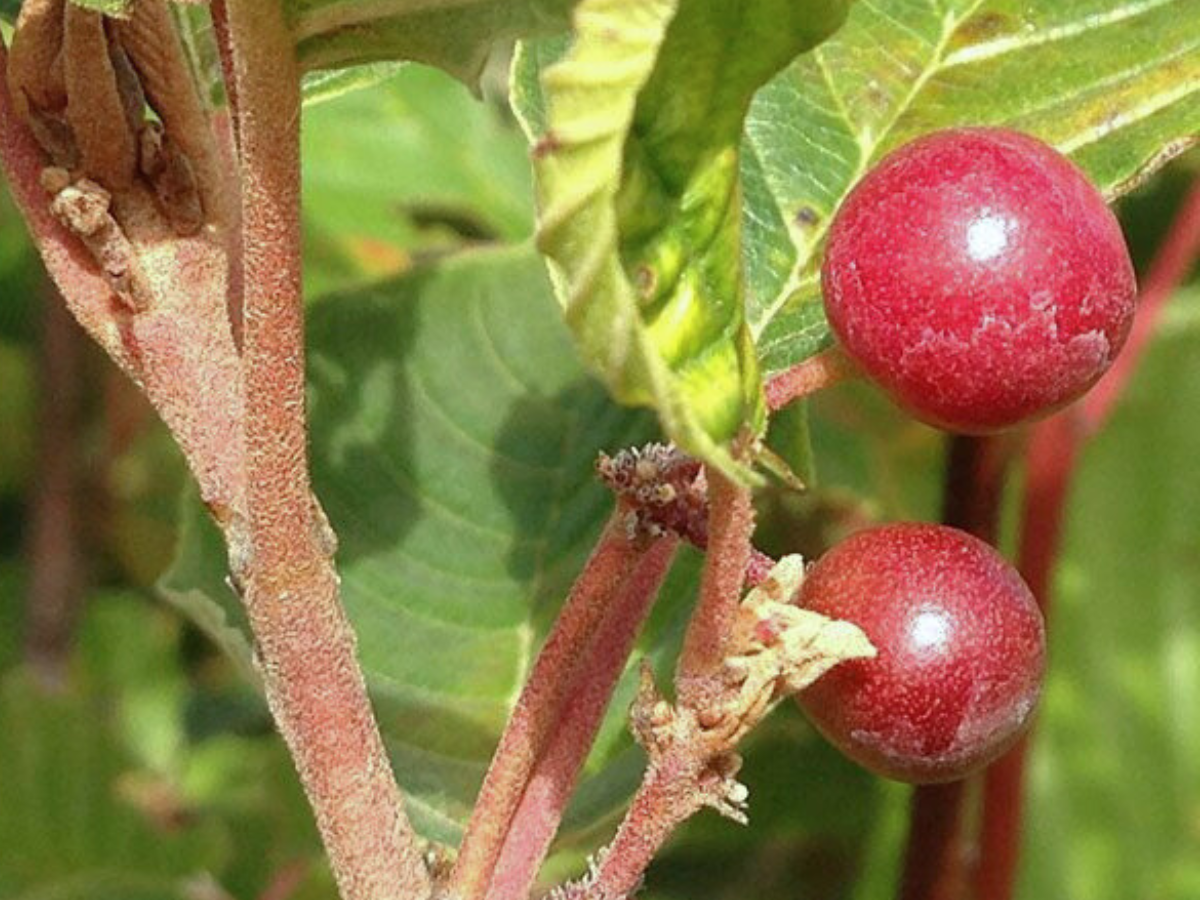
Frangula purshiana
Cascara
One of the woodland’s most expressive structural materials.
Cascara is valued for its natural arcs, asymmetrical branching,
and fluid line movement. The stems carry an almost hand-drawn quality — gestural rather than rigid — allowing
compositions to feel open, directional, and alive.
Especially effective where silhouette and negative
space is doing as much work as bloom.
Seasonal Window
Primarily early autumn through early spring, with
branching character shifting subtly through the season.
Design Character
Linear, gestural, asymmetrical. Creates movement,
directional flow, and open architectural structure.
Works Especially Well In
Branch-led arrangements, large-scale installations,
editorial work, and designs built
around line and negative space.
Often Paired With
Vine maple, smoke bush, grasses, woodland foliage,
and restrained seasonal bloom.
Availability Rhythm
Cut selectively for stem clarity, movement,
and mature branching structure.
Availability varies with seasonal growth
rhythm and woodland response.
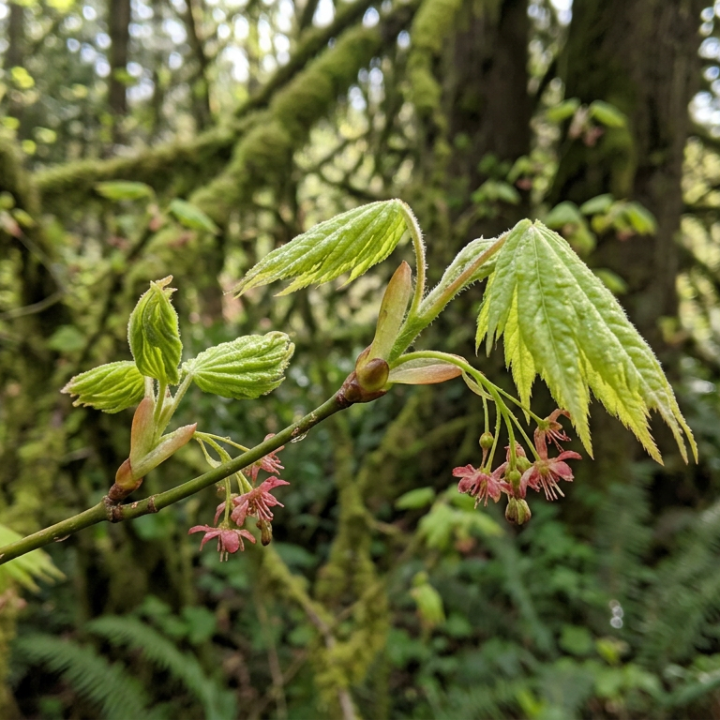
Acer circinatum
Vine Maple
A defining structural material of the Pacific Northwest woodland.
Vine maple brings layered branching, shifting seasonal
color, and a naturally sculptural habit that reads equally well
in minimal arrangements
and large-scale installations.
The stems move with quiet irregularity — never rigid, never overly controlled — creating structure that still feels
organic and responsive.
Its character changes noticeably through the seasons, from fresh spring branching to autumn
color and winter silhouette.
Seasonal Window
Available across multiple seasonal stages, including spring
leaf-out, autumn color,
and winter branching.
Design Character
Architectural, layered, and
naturally gestural. Offers
branching structure, silhouette,
and seasonal tonal variation.
Works Especially Well In
Large-scale installations, vessel-forward compositions, woodland palettes, and designs centered
on branch movement
and spatial structure.
Often Paired With
Cornus, cascara, snowberry,
moss, evergreen textures, and seasonal woodland foliage.
Availability Rhythm
Harvested selectively throughout the
year in limited quantities,
with availability shaped by
seasonal form, color transition,
and woodland stewardship.
Autumn – Color & Woodland Ephemera
Cooling temperatures deepen foliage tone, surface texture, branching color, and late-season woodland contrast.
Berries, lichen, weathered materials, and autumn foliage introduce tonal richness, irregular texture, and a quieter structural presence as the woodland reopens for the season.
The Materials Guide and Woodland Behavior Glossary offer further context for working with autumn’s textural and ephemeral materials.
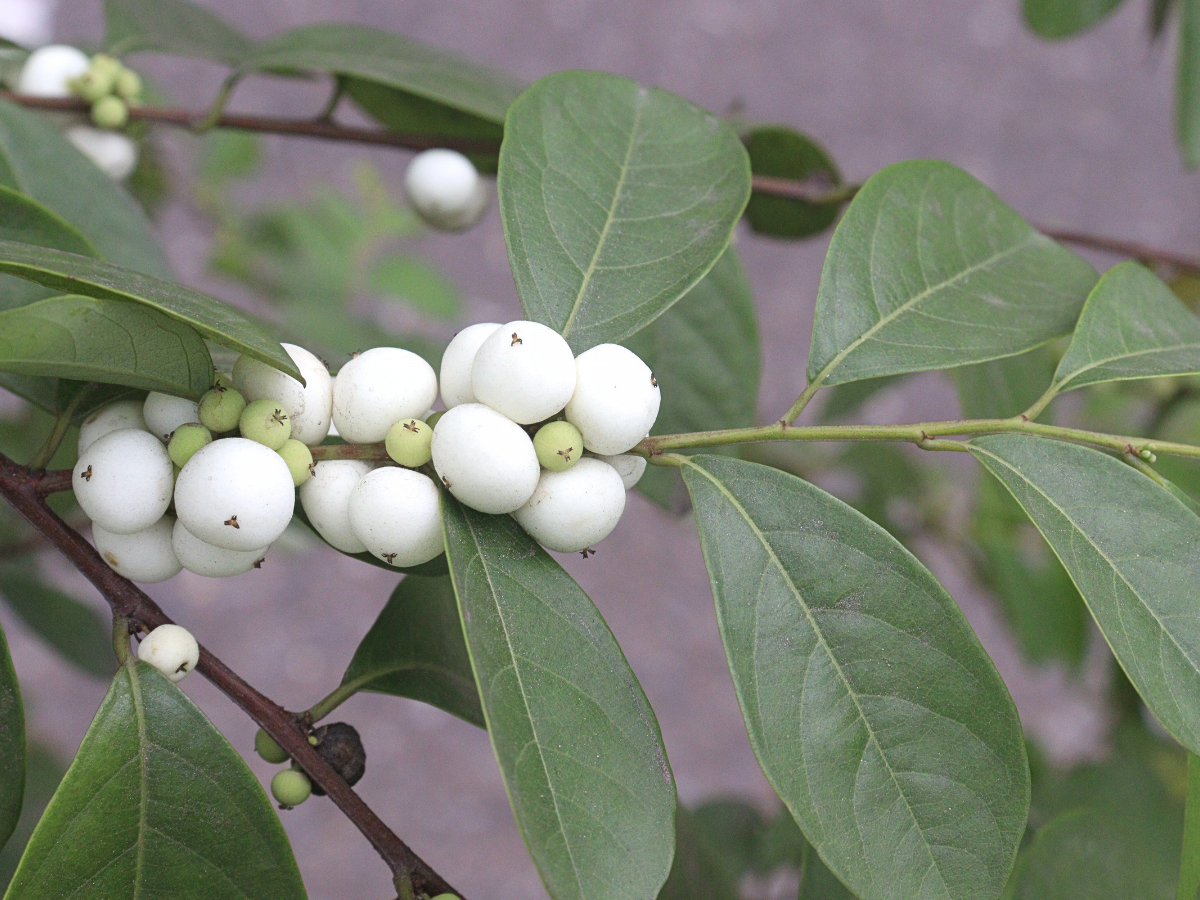
Symphoricarpos albus
Snowberry
Quiet, light-responsive,
and unmistakably
woodland in character.
Snowberry carries slender branching lined with matte white berries that seem to hover within a composition rather than dominate it.
The stems bring softness and spacing to branch-led work,
offering subtle rhythm and
seasonal contrast as the
landscape moves deeper
into autumn and winter.
Especially effective in restrained palettes where texture, silhouette, and atmosphere carry the design.
Seasonal Window
Late summer through winter,
with strongest berry presence
in autumn and early winter.
Design Character
Delicate, airy, and lightly architectural. Adds spacing,
tonal contrast, and quiet
movement without
visual heaviness.
Works Especially Well In
Autumn arrangements, winter palettes, editorial installations,
and designs built around
negative space and
tonal restraint.
Often Paired With
Vine maple, Cornus, evergreen textures, moss, dried grasses, and woodland branching materials.
Availability Rhythm
Harvested selectively as berries mature and weather conditions allow, with availability shifting throughout the cold season.
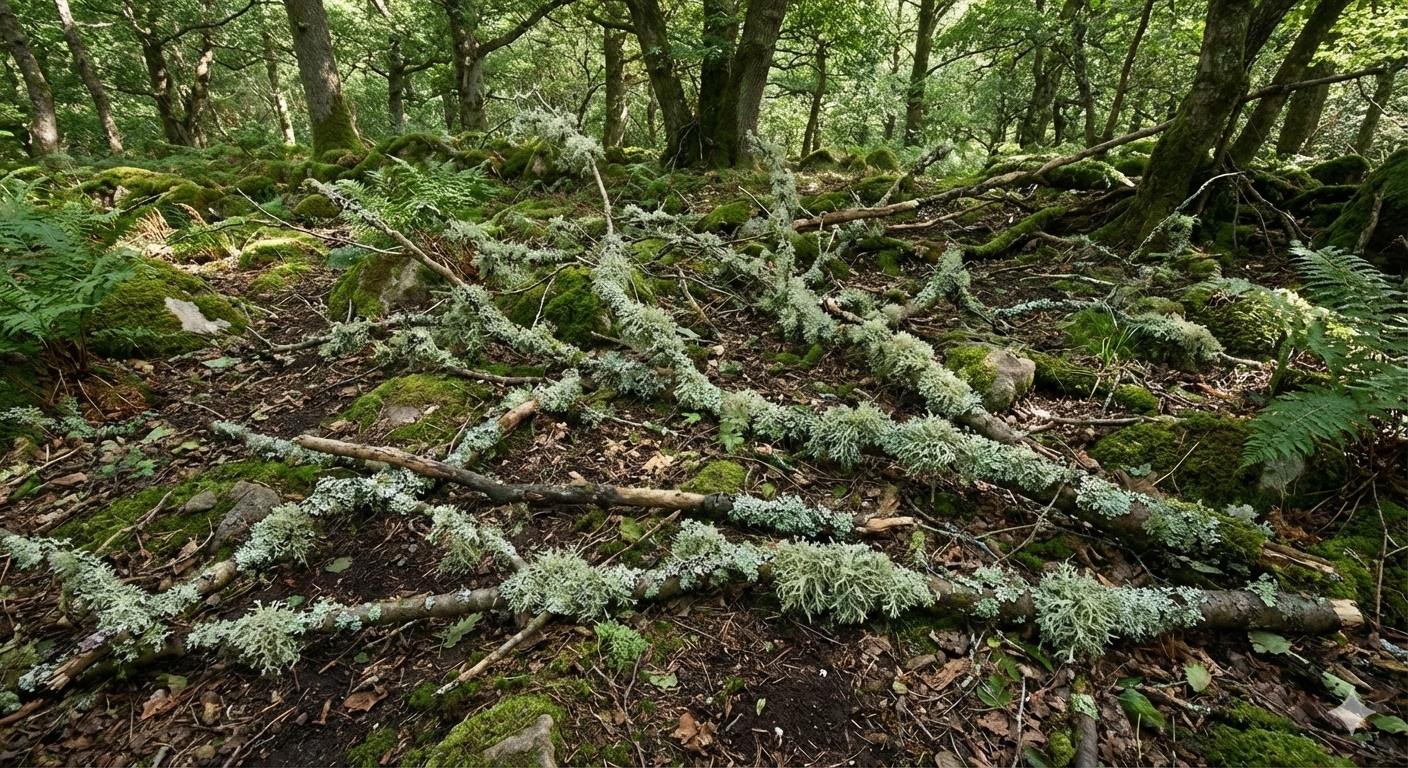
Evernia prunastri
Oakmoss Lichen
Soft, pale, and quietly atmospheric, oakmoss brings an aged woodland quality that cannot be replicated
by cultivated material.
Its branching structure creates
a delicate veil across branches, vessels, and installations — introducing texture, muted tonal variation, and a sense of time
shaped slowly by moisture,
air, and forest shade.
Even in small amounts, it alters
the visual temperature
of a composition.
Used most effectively as a subtle supporting layer within
restrained, nature-led work.
Seasonal Window
Available in limited quantities throughout cooler months, particularly autumn
through spring.
Design Character
Feathery, textural, and softly dimensional. Adds surface complexity, tonal softness, and woodland age to a composition.
Works Especially Well In
Editorial installations, winter arrangements, moss-forward palettes, branch studies, tablescapes, and woodland ephemera work.
Often Paired With
Vine maple, Cornus, moss, evergreen textures, stone vessels, and naturally weathered
branching materials.
Availability Rhythm
Gathered selectively after wind
and rainstorms, when naturally fallen material is freshest and
most structurally intact.
Offered only in very limited quantities with regeneration
and habitat stewardship
guiding all collection.
cultivated companions
Select cultivated materials grown for tonal harmony, structural compatibility, and natural dialogue with woodland stems
Used to soften branching, extend seasonal palettes, and introduce subtle contrast without overpowering the native material language of the woodland.
The full native palette is documented in the Species Atlas and Species Index.
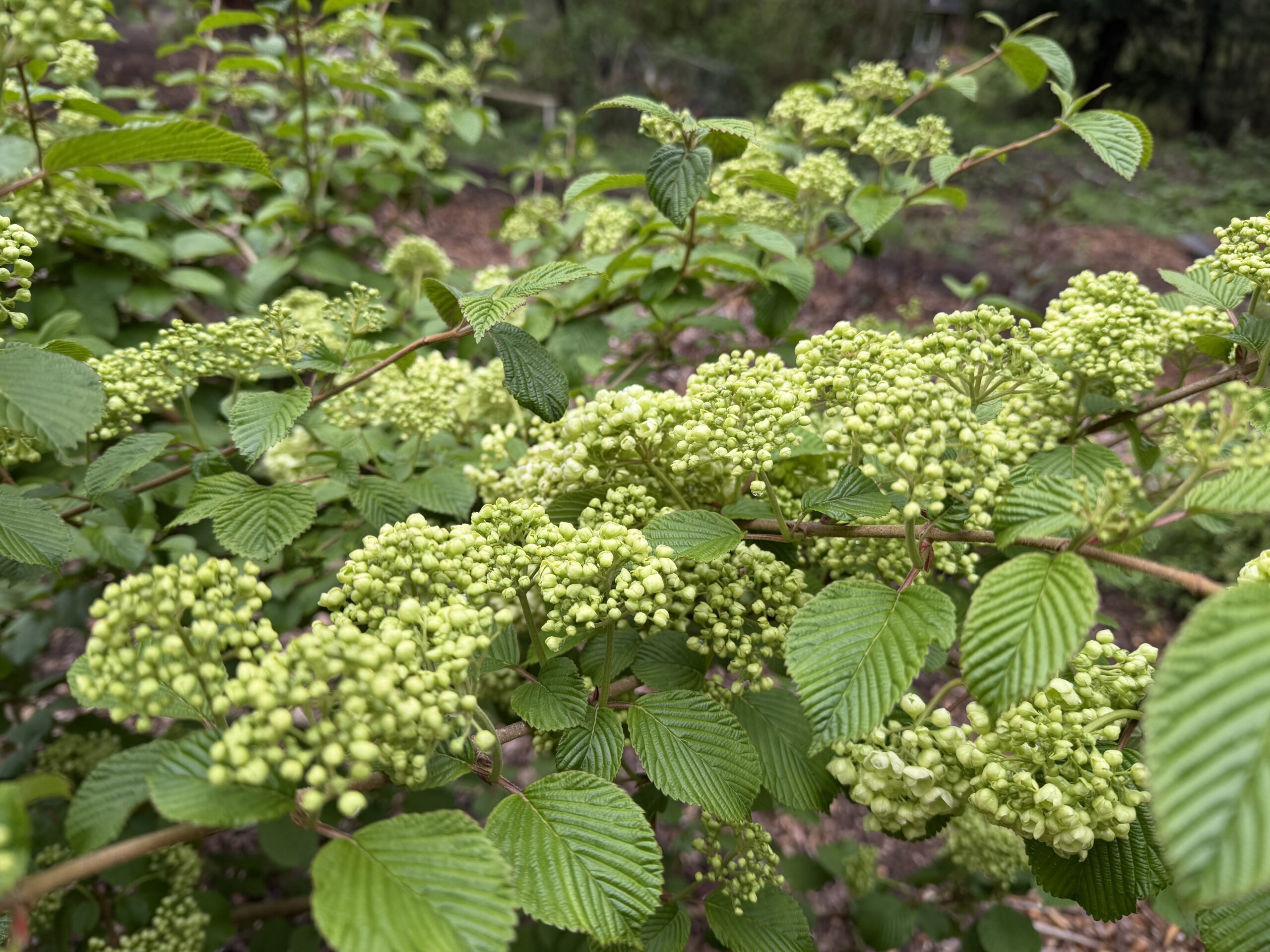
Viburnum plicatum
Japanese Snowball Viburnum
Cultivated Companion
A cultivated spring material
valued for both branching
structure and clustered bloom.
Viburnum plicatum carries
layered horizontal branching
lined with soft green flowering clusters that gradually open into suspended white blooms.
Even before flowering, the
stems bring rhythm and
directional movement into a composition, while the pleated foliage adds texture and
surface variation throughout
the spring season.
Though cultivated rather than native, it integrates naturally
within the woodland palette, especially when paired with
looser branching materials
and early-season ephemera.
Seasonal Window
Mid-spring through early May,
with flowering timed closely to seasonal temperature shifts.
Design Character
Layered, branching, and softly architectural. Adds rhythm, suspended bloom, and structured spring movement to a composition.
Works Especially Well In
Spring installations, vessel-forward arrangements, branch-led designs, and compositions balancing woodland looseness with
cultivated floral structure.
Often Paired With
Vine maple, osoberry, flowering currant, moss, hellebore, and emerging woodland foliage.
Availability Rhythm
Offered briefly during the spring flowering window, with cutting timed closely to branching
structure and bloom stage.
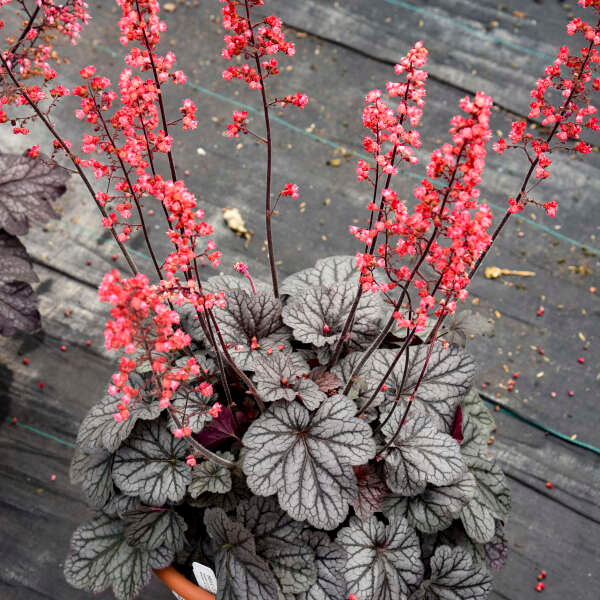
Heuchera
Silver Jewel Foliage
Cultivated Companion
A cool-toned foliage material carrying silvered leaves
traced with deep charcoal veining and soft surface ruffling.
The foliage behaves almost like scattered woodland jewels
within a composition — reflective in low light, finely
detailed, and visually quiet despite its tonal contrast.
Its smaller, more refined leaf form brings texture
and luminosity close to the vessel without
adding visual weight or broad massing.
Coloration deepens noticeably as temperatures
cool, shifting toward richer charcoal, plum,
and smoked silver tones in autumn.
Especially effective in arrangements where
layered foliage, shadow, and surface detail
carry more presence than bloom.
Seasonal Window
Spring through mid-June, with a return in
early autumn as cooler temperatures
intensify foliage coloration.
Design Character
Refined, tonal, and softly reflective.
Adds delicate texture, surface contrast,
and quiet luminosity within woodland palettes.
Works Especially Well In
Woodland compotes, editorial tablescapes,
foliage-forward arrangements, and restrained
palettes built around texture and shadow.
Often Paired With
Moss, oakmoss lichen, hellebore, vine maple,
snowberry, and other muted woodland materials.
Availability Rhythm
Harvested selectively during spring and autumn
woodland harvest windows for foliage clarity,
veining definition, and seasonal tonal depth.
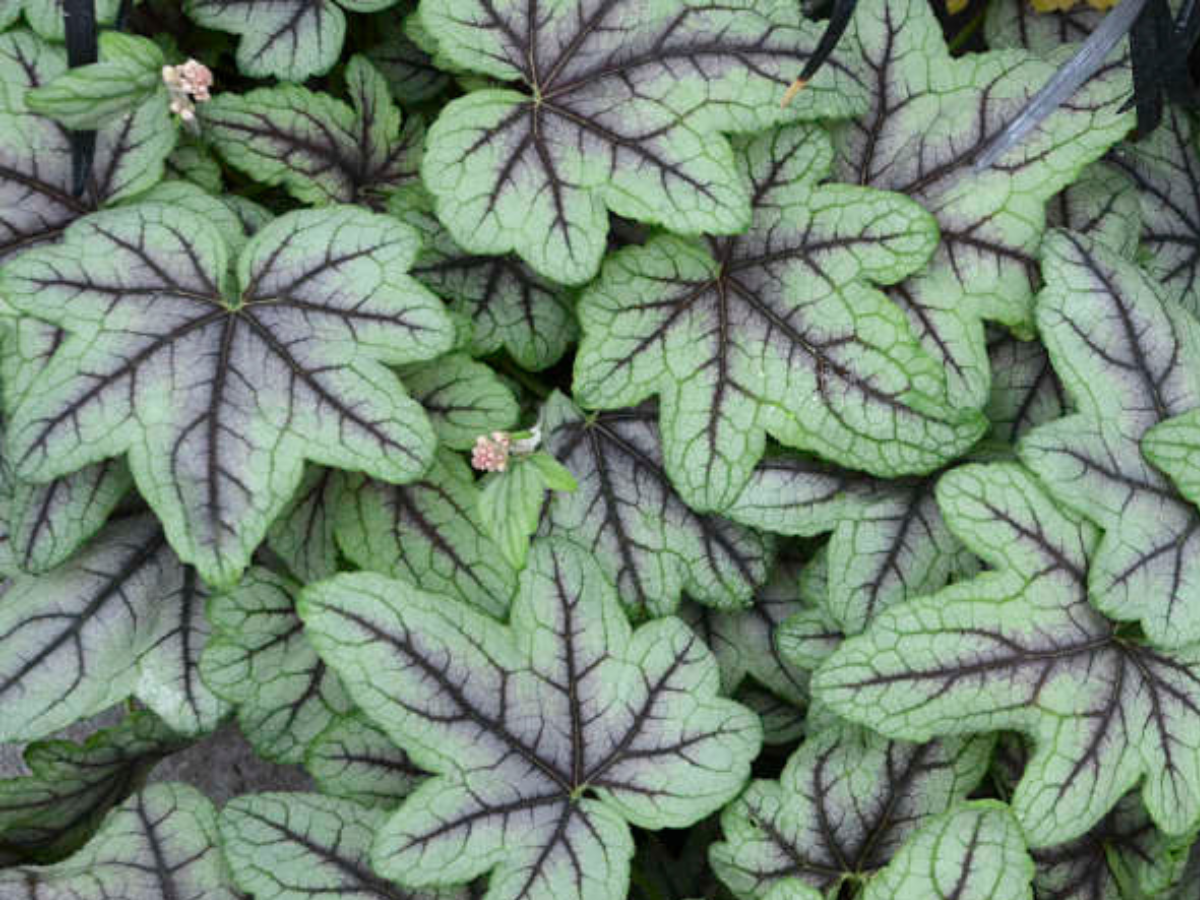
Heucherella
Veiled Berry Foliage
Cultivated Companion
A finely textured foliage material carrying deeply
lobed green leaves washed with soft silvering
and pronounced wine-toned veining.
The foliage brings intricate surface detail and
layered coloration into woodland palettes
while maintaining a light visual presence.
In early summer, upright bloom wands rise just
above the foliage with closely spaced pink flowers
that introduce movement and soft seasonal brightness
without overpowering the composition.
Especially useful where delicate foliage texture and
subtle color variation is needed near the vessel line.
Seasonal Window
Spring through mid-June, with a return in early
autumn as cooler temperatures restore
deeper foliage coloration and contrast.
Design Character
Detailed, lightly animated, and tonal. Adds fine texture, layered veining, and soft lifted bloom movement.
Works Especially Well In
Woodland compotes, spring arrangements,
editorial tablescapes, and foliage-forward
compositions with restrained seasonal color.
Often Paired With
Moss, hellebore, osoberry, flowering currant,
vine maple, and muted woodland foliage.
Availability Rhythm
Harvested selectively during spring and autumn
woodland harvest windows for foliage clarity,
veining intensity and refined seasonal coloration.
See how Woody Shoots works with designers →
When dates and palettes begin taking shape — whether for an intimate tablework project or a large-scale installation —
inquire about current seasonal availability.