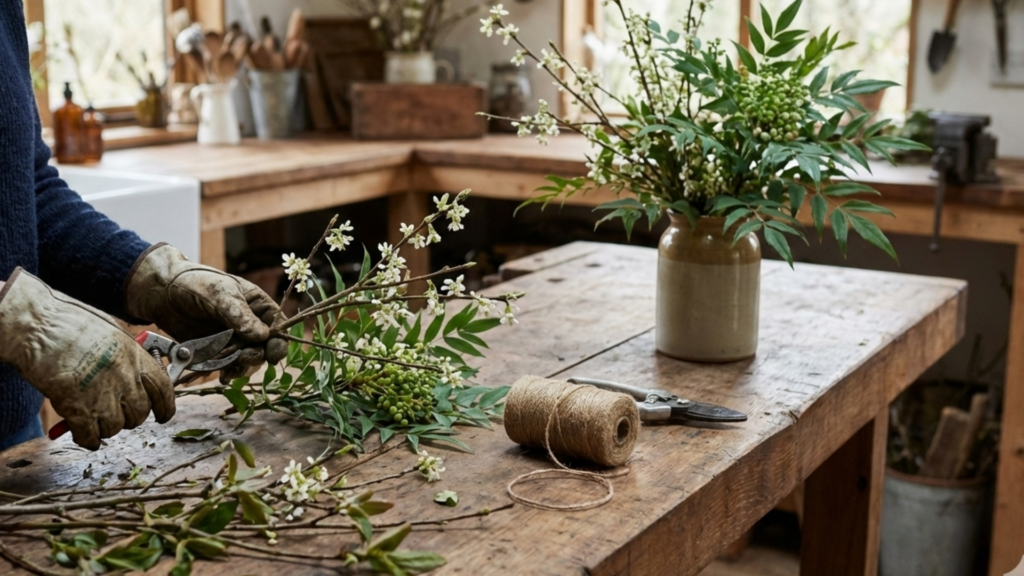
Native botanicals for Floral Designers
Woody Shoots is a designer-only woodland atelier in Arlington, Washington — a small, seasonally curated source of native botanicals for floral designers working in the luxury, editorial, and event space. This page is a quiet reference point for how the atelier works, what the woodland offers, and whether this is the right creative partnership for your practice. For designers new to woodland sourcing, the Washington Native Plant Society offers a useful introduction to the native species that shape this palette.
What the Woodland Offers
The work begins in the woodland folds — quiet contours of fir shade, understory lift, and hillside light. From these places, Diane Dixon harvests stems with structure, movement, and a clear sense of origin. Native-led palettes, select evergreen presence, and character-rich branching are the language of this atelier.
The person and woodland behind each pull →
Season by season, the woodland offers different expressions. Spring brings the first bright greens and early architecture. June brings peony season, our fullest window, before the woodland rests in July and August. Autumn carries color and sculptural form. Winter reveals the clean bones of the land. Every harvest follows those rhythms — selective, unhurried, and guided by what the woodland is actually doing.
Backbone and Structure: Architectural woody cuts with curve and character. Evergreen and deciduous foliage chosen for line, resilience, and foam-free work. Textural understory materials that blur the boundary between garden and forest. Explore the full palette in the Species Atlas and Materials Guide.
Seasonal Counterpoints: Woodland Spring ephemerals and understory blossoms when the forest allows. Berry, seed, and twig accents that bring depth to winter and shoulder seasons. Mossy, branchy, and in-between elements for installations and styled work. The Seasonal Botanicals page maps what’s available across the full year.
New to woodland sourcing?
You are welcome here. Woody Shoots is not a wholesale shop or an open catalog — it is a small PNW woodland atelier that works with a handful of designers each season through seasonal conversation and cut-to-order harvests. If you are exploring native woodland materials for the first time, simply share the kind of work you love to create. The Species Index is a good place to begin. The rest unfolds through inquiry.
The Woodland, Season by Season
Woody Shoots works with designers who source with intention — who choose materials for gesture, movement, and seasonal authenticity rather than abundance.
Availability is shaped by a five-acre woodland in Arlington, Washington — its light, its rain, and its rhythm. Here is how the seasons unfold for design work.
Availability is shaped by a 4.89-acre woodland in Arlington, Washington — its light, its rain, and its rhythm. Here is how the seasons unfold for design work.
Winter — Frost and Structure. Colored Cornus stems, select evergreen presence, and bare expressive line shape the bones of compositions when petals are scarce. This is Woody Shoots’ most distinctive offering window — a structural palette no commodity source can replicate.
Late Winter and Early Spring — The Awakening. The first soft greens, native understory movement, and lightly scented early accents signal that the woodland is waking. Osoberry arrives before anything else dares. These windows are measured in days, not weeks — designers who are paying attention are the ones who access them.
Spring — The Ephemeral Season. Foliage color deepens, texture builds, and palettes become more tonal and grounded. Viburnum flowering branches, Heuchera foliage in smoke and ember, Cascara in full gestural movement. Spring here is brief and specific — it arrives on the woodland’s schedule, not a supplier’s.
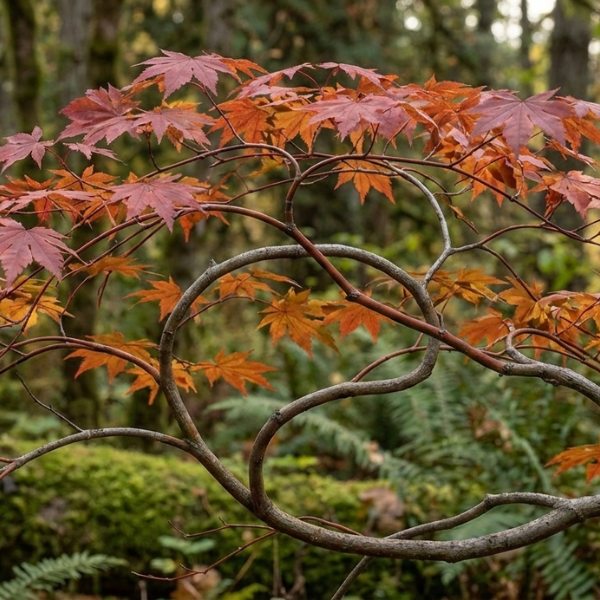
Autumn — Fade and Ember. Berries, moss, lichen, and weathered tones bring a quieter richness. Vine maple in flame, snowberry punctuation, the late architecture of the season settling into winter’s quiet. Autumn at Woody Shoots is a palette no imported material can replicate.
Woody Shoots works with a small circle of designers each season, so there is room for genuine conversation, scouting, and thoughtful harvests. Some designers work with the woodland season after season. Others step in for specific windows when the materials align.
Our Seasons
| Season | Months | What the woodland offers |
| Autumn | September to November | Vine maple in color, snowberry, cascara, aged hydrangea, Jewel Box foliage, lichen, echinops, and dried stems from the summer harvest |
| Winter | December to January | Woodland architecture: red twig dogwood, western red cedar, vine maple line, lichen on stormfall |
| Late winter | February to March | First movement: osoberry, red flowering currant, cascara, cedar and dogwood |
| Spring | April to mid May | Unfurling: cascara, Jewel Box foliage, viburnum, spirea, currant in bloom |
| Peony season | Late May to June | Our fullest window: peonies, astilbe, mountain mint, weigela and Jewel Box foliage |
| Closed | July and August | Summer rest. The woodland breathes, and so do we. |
What appears in a given week depends on the woodland, not the calendar.
How WOODY SHOOTS WORKS
Introduce your studio
Send a brief note with your studio name, location, and the kinds of projects you design — weddings, events, editorial, or installation work. This helps Diane understand how you work and where woodland materials might best support your practice.
Shape a seasonal palette
Diane will discuss timing, color direction, and the mood you are working toward. She will share what is unfolding in the woodland and suggest materials suited to your mechanics, scale, and way of working — always guided by the season rather than a fixed list.
Cut-to-order harvest
Once the palette is aligned, materials are harvested to order for your project window. Because every stem is cut fresh for the specific pull, pickups are by appointment only in Arlington, WA, 1.1 miles off I-5 at
Exit 212. This keeps stems as fresh and unhandled as possible, and the process
as unhurried as it should be.
practical details for designers
How far in advance should I reach out?
For weddings and larger events, four to eight weeks is ideal. This allows time to plan harvests around your palette, mechanics, and the woodland’s natural timing. For smaller projects or editorial work, reach out as soon as dates are confirmed and you have a general sense of scope.
What is a pull?
A pull is a curated selection of seasonal materials cut and conditioned to your project — planned for palette, mechanics, scale, and the woodland’s timing. It is not a stem-by-stem menu. Instead, it is an intentional set designed to give you range, structure, and cohesion. You will receive a simple confirmation of what is included before pickup. Think of it as a designed set of materials, not a shopping list.
How does pricing work?
Pricing reflects seasonal availability, harvest and conditioning time, and the scale of the pull. After timing and design intention are confirmed, Diane will share a simple estimated range before cutting. There is a $75 minimum per order, and Diane shares the current price sheet when you inquire. Larger weddings and installations are priced by scope and timing.
Is there a minimum order?
Yes. Because each harvest is cut to order, there is a $75 minimum per order. This ensures the pull is cohesive and worth preparing. Think in terms of a focused design need rather than one-off stems or small add-ons. If you are unsure whether your project fits, send a note and Diane will talk it through with you.
Do I need a reseller permit?
Yes. Woody Shoots is designer-only, so we keep a current Washington reseller permit on file for every studio.
Do you offer delivery?
Not at this time. All orders are pickup only in Arlington, WA, 3 minutes off I-5 at Exit 212, Monday to Friday 09:00 to 15:00, Saturday by appointment. This keeps materials fresh and ensures they are handled with care. For larger installations, support options can be discussed on a case-by-case basis.
Do you have a standing availability list?
Not at this time. Woody Shoots works seasonally rather than from a static list. Instead, Diane shares what is looking strong in the woodland in real time, once you reach out with dates and design intention.
Can I visit the woodland?
Designer visits are occasionally available by appointment. If a site walk would support a specific project, mention it when you reach out and Diane will explore what is possible.
If this way of working resonates, you are warmly invited to reach out and begin a seasonal conversation.